
Is Your Electrical Panel Ready for Solar and EV Charging in San Diego?
Whether does your electrical panel support both solar and EV charging is a question you’ve just started asking or one that’s been nagging you since you bought your EV or got your first solar quote — the answer depends on a few key factors you can check right now.
Here is a quick snapshot to help you assess where you stand:
| Panel Size | Can It Support Solar? | Can It Support a Level 2 EV Charger? | Both Together? |
|---|---|---|---|
| 60-amp | No | No | No |
| 100-amp | Sometimes, with limits | Rarely without load management | Usually not without upgrade |
| 125-amp | Sometimes | Possibly with load management | Borderline — needs load calc |
| 200-amp | Yes, in most cases | Yes, in most cases | Yes, for most homes |
| 400-amp | Yes | Yes | Yes, including multiple EVs or ADUs |
The short answer: a 200-amp panel is the baseline most San Diego homes need to safely run both a solar system and a Level 2 EV charger. Homes with 100-amp service — common in houses built before 1980 — almost always require some form of upgrade or load management before adding both.
But panel size is only part of the picture. Your bus bar rating, available breaker slots, existing loads, and how solar connects to your system all play a role. About 20% of homes need at least some electrical upgrade before an EV charger can be safely installed — and that number climbs when you add solar to the mix.
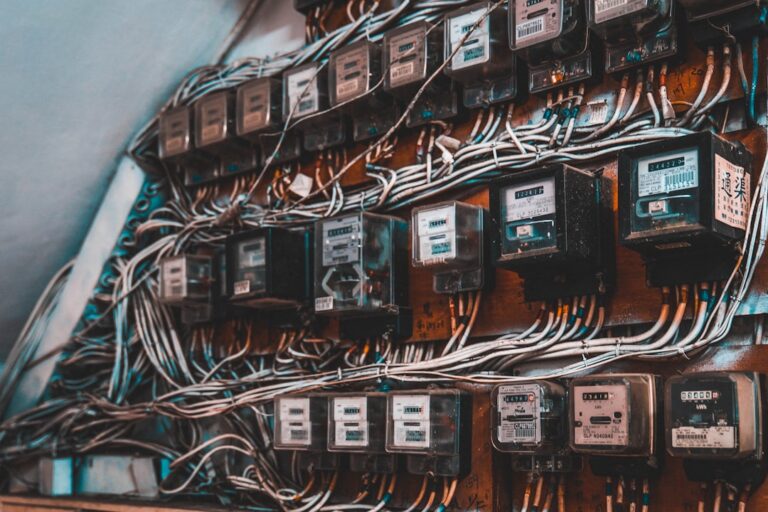
Your electrical panel is the bottleneck standing between your home as it works today and the energy-efficient, electrified home you want it to be. Before you sign a solar contract or order an EV charger, it pays to know exactly what your panel can handle.
The sections below walk you through how to find out — and what your options are if your panel comes up short.

Assessing Your Current Capacity: Does Your Electrical Panel Support Both Solar and EV Charging?

When we talk about whether your home can handle the transition to clean energy, we are really talking about “ampacity.” This is the maximum amount of electrical current your panel can safely handle at one time. To find your number, you don’t need to be an electrician; you just need to locate your main service breaker. This is usually the largest switch at the very top or bottom of your panel, often stamped with a number like 100, 125, or 200.
In many older San Diego neighborhoods, from North Park to Escondido, homes were built with 100-amp service. Back then, that was plenty for a refrigerator, some lights, and a television. Today, adding a Level 2 EV charger (which draws 40–48 amps) and a solar inverter to that same 100-amp panel is like trying to run a marathon while breathing through a straw.
A professional load calculation is the only way to be 100% sure. This isn’t just a visual check; it’s a mathematical assessment of your square footage and existing major appliances (like your AC, dryer, and stove). If you’re planning to install Solar Panels, we look at how that energy enters your home and how much “headroom” is left for your car.
Identifying signs of a maxed-out system
Sometimes your panel will tell you it’s struggling before it actually fails. If you notice your lights flickering when the air conditioner kicks on, or if a breaker trips every time you try to vacuum while the dryer is running, your system is likely at capacity.
Other warning signs include:
- Panel Heat: If the panel cover feels warm to the touch, that’s a sign of internal resistance and potential overloading.
- Humming or Buzzing: Electricity should be silent. Any noise coming from the box indicates a loose connection or a failing breaker.
- Physical Wear: Visible corrosion or burn marks on the bus bar (the metal track the breakers snap into) are immediate red flags.
If you are seeing these signs, it’s time to talk about an upgrade before you even think about adding Solar or an EV charger.
Why your electrical panel support both solar and ev charging matters for safety
Safety isn’t just about capacity; it’s about the hardware itself. Certain older panel brands, specifically Federal Pacific Electric (FPE) and Zinsco, are notorious for safety hazards. FPE “Stab-Lok” breakers have a high failure rate where they refuse to trip during an overcurrent, while Zinsco breakers have been known to fuse to the bus bar.
When we evaluate if a home’s does your electrical panel support both solar and EV charging, we first ensure you aren’t working with one of these “fire-prone” models. Modern panels include advanced arc-fault protection and surge suppression that older boxes simply don’t have. Ensuring your system is up to current California electrical codes isn’t just a hurdle—it’s a prerequisite for an Energy Panel Manufacture Boost Solar System to function without putting your family at risk.
The NEC 120% Rule and Solar Interconnection
The National Electrical Code (NEC) has a specific rule that often surprises homeowners. It’s called the 120% Rule. Essentially, the code allows the total current from your utility main breaker and your solar inverter to exceed the panel’s bus bar rating by 20%.
On a standard 200-amp panel, the bus bar is usually rated for 200 amps. The 120% rule means you can have a combined input of 240 amps (200 x 1.2). If your main utility breaker is 200 amps, that leaves you with exactly 40 amps of “space” for solar backfeed.
| Bus Bar Rating | Main Breaker Size | Max Solar Breaker (120% Rule) |
|---|---|---|
| 100 Amps | 100 Amps | 20 Amps |
| 125 Amps | 100 Amps | 50 Amps |
| 125 Amps | 125 Amps | 25 Amps |
| 200 Amps | 200 Amps | 40 Amps |
| 200 Amps | 175 Amps | 65 Amps |
This rule is critical when planning Battery Backup Systems Solar Panels in Poway. If your solar system is large, you might “run out of room” on the bus bar, even if you have physical space for more breakers.
Managing solar backfeed on 100-amp and 125-amp panels
If you have a 100-amp or 125-amp panel and want to go solar, you have a few options to satisfy the 120% rule without a full replacement. One common tactic is “derating” the main breaker. For example, if you have a 125-amp panel with a 125-amp main breaker, you only have 25 amps of solar capacity. By swapping the main breaker for a 100-amp version, you suddenly open up 50 amps of capacity for your solar system.
Another requirement is that the solar breaker must be placed at the opposite end of the bus bar from the main utility breaker. This prevents “hot spots” where too much current converges in one area. If you’re also adding Battery Backup for Solar, the interconnection becomes even more complex, requiring careful design to ensure the utility grid and your battery work in harmony.
Integrating Level 2 EV Chargers with Solar Systems
A Level 2 EV charger is a significant addition to any home. Unlike a standard wall outlet (Level 1), which provides about 3–5 miles of range per hour, a Level 2 charger uses a 240V dedicated circuit and can provide up to 60 miles of range per hour.
Because EV charging is a “continuous load” (meaning it runs for hours at a time), the NEC requires the “80% Rule.” This means if you have a 50-amp breaker, you can only safely draw 40 amps of continuous power. This is a major reason why we often recommend a Tesla Wall Charger Installation on a dedicated 60-amp circuit—it allows for the maximum 48-amp charge rate.
The beauty of Charging Tesla with Solar Panels is that you are essentially fueling your car with sunshine. However, your panel must be able to handle that 48-amp draw simultaneously with your other household needs.
Sequencing your home electrification project
We often see homeowners buy an EV first, then realize they need a charger, then realize their panel is full. The best approach is to design your “energy ecosystem” all at once. Even if you aren’t ready for solar today, if you are upgrading your panel for an EV, we can install a “Solar-Ready” panel that has the bus bar capacity and breaker space reserved for the future.
This “future-proofing” is especially important if you plan on adding other electric appliances like heat pumps or induction stoves. Following a Tesla Model 3 Home Charger Guide can help you understand the specific needs of your vehicle, but a Wall Mount Tesla Charger is only as good as the panel feeding it.
Optimizing how your electrical panel support both solar and ev charging under NEM 3.0
In May 2026, we are well into the era of NEM 3.0 in California. Under these rules, the value of exporting solar energy back to the grid has dropped significantly. The goal now is self-consumption—using as much of your solar energy as possible right at home.
This makes the interaction between your solar, your battery, and your EV charger more important than ever. By using Services Powerwall, you can store solar energy during the day and use it to charge your EV at night. Your electrical panel acts as the traffic controller for this energy. A Tesla Wall Mount Charger Complete Guide will often show you how to schedule charging for when solar production is highest or utility rates are lowest.
Smart Alternatives to Full Panel Replacements
What if your panel is at capacity but you don’t want to spend thousands on a full service upgrade? In the last few years, “Smart Panel” technology and load management devices have become game-changers.
- Load Shedding: These devices monitor your total home draw. If you turn on your electric oven and AC at the same time, the system will temporarily “shed” (pause) the EV charger to keep you under your 100-amp limit.
- Circuit Sharing: These allow two high-draw appliances (like a dryer and an EV charger) to share one circuit. The charger only turns on when the dryer is off.
- Smart Panels: Brands like Span or Schneider Pulse replace your standard breaker box with a computer-controlled hub. They can automatically manage loads to avoid a 400-amp upgrade.
- Subpanels: If you just need more physical space for breakers but have the electrical capacity, a subpanel can be a cost-effective solution. You might even consider a Tesla Charger Ceiling Mount if your garage wall space is limited.
Navigating the permitting and utility process in San Diego
Any time we touch your main service panel or add solar, we have to coordinate with San Diego Gas & Electric (SDG&E). This involves:
- Rule 21 Compliance: This governs how your solar system interacts with the grid.
- Building Permits: Required by the city (whether you’re in Poway, Carlsbad, or Chula Vista) to ensure the work is safe.
- Site Inspection: A city inspector will verify the grounding electrode system and all connections.
- Utility Coordination: If you need a “service upgrade” (meaning the wires from the street to your house need to be thicker), SDG&E has to be involved in the disconnect and reconnect.
If the scope of work feels overwhelming, we offer Financing Poway CA options to help make these essential safety upgrades more manageable.
Frequently Asked Questions about Panel Compatibility
How many solar panels do I need to offset my EV charging?
The average EV driver in San Diego travels about 12,000 miles a year. Most modern EVs use about 1 kWh of electricity for every 3 miles. That means you need roughly 4,000 kWh of energy per year just for your car.
In our sunny climate, a typical 400-watt solar panel produces about 600–700 kWh per year. To fully offset one EV, you would need to add 6 to 8 additional solar panels to your system. Of course, we recommend sizing a bit larger to account for cloudy days and future driving needs.
Can I add an EV charger to a 100-amp panel without an upgrade?
Yes, but with caveats. You generally cannot add a full 48-amp Level 2 charger to a 100-amp panel that is already powering a modern home. However, you can use a “Smart EVSE” (Electric Vehicle Supply Equipment) that limits the draw to 16 or 24 amps, or uses load-sensing technology to throttle the charger based on what else is running in the house. This complies with NEC Article 220 and can save you from a full panel replacement.
What is the difference between a panel upgrade and a service upgrade?
These terms are often used interchangeably, but they are different:
- Panel Upgrade: Replacing the breaker box (the “panel”) inside or outside your home.
- Service Upgrade: Replacing the “service entrance” equipment, including the meter base and the wires coming from the utility pole or underground lateral.
If you are moving from 100-amp to 200-amp service, you almost always need both.
Conclusion
The transition to a cleaner, more efficient home is an exciting journey, but it starts with a solid foundation. Your electrical panel is the heart of your home’s energy system. Ensuring it can handle the demands of the modern world—from solar arrays to high-speed EV charging—is the best way to protect your investment and your family.
At Hans Energy Systems, we pride ourselves on helping San Diego homeowners navigate these technical waters. Whether you are in Poway, Ramona, or Downtown San Diego, we provide professional load calculations and expert installations that meet the highest safety standards.
Ready to see if your home is ready for the future? Schedule a consultation for Tesla charging with solar panels with our team today, and let’s build an energy ecosystem that works for you.