

How Mini Splits Solve Hot and Cold Spots in Your Home — And Why It Matters
How mini splits solve hot and cold spots in your home comes down to one core idea: instead of pushing air through leaky ducts to every room at once, a mini split delivers conditioned air directly to the room that needs it. Here’s a quick breakdown:
- Zoned control — Each indoor unit handles one room or area independently
- No ductwork — Air goes straight to the space, skipping the energy losses that plague central systems
- Year-round comfort — The same unit heats in winter and cools in summer
- Direct airflow — Sensors adjust output in real time to hit your exact target temperature
- Works where ducts can’t — Attics, additions, garages, and older homes without existing ductwork
If you’ve ever been perfectly comfortable in your living room while your bedroom feels like a sauna — or shivered through the night in a room that never quite warms up — you already know the frustration of uneven home temperatures. It’s one of the most common complaints among San Diego homeowners, especially in older homes and houses with additions that the original HVAC system was never designed to handle.
The problem isn’t always a broken system. Sometimes it’s simply the limits of how central air works. A single thermostat reads the temperature in one spot and shuts the system off once that spot is satisfied — even if the upstairs bedroom or converted garage is still 10 degrees off from where you want it. Ductwork leaks make it worse. Poor insulation makes it worse. And rooms with big windows or high ceilings? They’re fighting a losing battle against a system built for the average room, not theirs.
Mini splits were designed specifically for situations like these.

Understanding Why Your Home Has Uneven Temperatures
Before we can talk about the solution, we have to look at why your home is playing “musical chairs” with the temperature. Most homes in areas like Poway or Carlsbad rely on a central furnace or AC. This system is a bit like a single light switch for the whole house; when you flip it, every room gets the same treatment, whether it needs it or not.
Several factors create these uncomfortable “zones”:
- Duct Leakage and Conduction: Did you know that traditional ductwork can lose up to 30% of its energy before the air even reaches your room? Holes, loose seals, or simply the air getting warm as it travels through a hot attic mean the air coming out of the vent isn’t as cold (or hot) as it started.
- Thermostat Lag: Your central thermostat is usually in a hallway or living room. Once that area hits 72 degrees, the system shuts off. Meanwhile, your upstairs bedroom—which might be facing the afternoon sun—is still stuck at 80 degrees. This is a classic case of Temperature Inconsistencies Ductless Ac Zones where the brain of the house doesn’t know what the limbs are feeling.
- Solar Gain and Insulation: Rooms with large, south-facing windows in San Diego can act like greenhouses. If the insulation in those walls isn’t top-tier, that room will always be a “hot spot” in July and a “cold spot” in January.
- Air Balancing Issues: Sometimes the physical distance from the blower motor is just too great. The room at the very end of the duct run rarely gets the same “oomph” as the room right next to the furnace.
How Mini Splits Solve Hot and Cold Spots in Your Home
So, how does a mini split fix this? It bypasses the “one-size-fits-all” approach entirely. A mini split consists of an outdoor compressor and one or more indoor air handlers. These handlers are installed directly in the “problem rooms.”
By using zoned cooling, you can set the temperature in your master bedroom to 68 degrees for sleeping while keeping the guest room at 74. Because each unit operates independently, the system doesn’t care what the hallway thermostat says—it only cares about the comfort of the room it is in. This is the most effective way of Fixing Uneven Cooling Issues In Ductless Ac because it treats the symptom exactly where it occurs.
Furthermore, modern systems as of May 2026 use inverter technology. Unlike old-school ACs that are either “all the way on” or “all the way off,” inverters adjust their speed dynamically. They provide a steady, gentle flow of air to maintain a perfect temperature rather than blast you with ice-cold air and then shut off completely.
How Mini Splits Solve Hot and Cold Spots in Your Home Through Direct Airflow
The “secret sauce” of the mini split is its ductless design. By delivering air directly into the living space, you eliminate the 30% energy loss associated with ductwork. There are no long metal tunnels for the air to travel through, meaning there are no conduction losses.
When you eliminate the middleman (the ducts), you are Maximizing Energy Savings With Ductless Ac because 100% of the energy you pay for stays in the room. This targeted delivery is why a mini split can make a previously “un-coolable” sunroom feel like an icebox in the middle of a San Diego heatwave.
How Mini Splits Solve Hot and Cold Spots in Your Home Year-Round
Don’t let the name “Air Conditioner” fool you. Most mini splits are actually high-efficiency heat pumps. They are essentially an air conditioner that can run in reverse. In the summer, they move heat from inside your home to the outside. In the winter, they find heat energy outside (yes, even when it’s chilly!) and move it indoors.
This makes them a year-round solution. They also provide excellent dehumidification, which is a lifesaver for those “sticky” days near the coast in Oceanside or Del Mar. And don’t worry about the hardware—modern units are designed to be resilient. While you might wonder Why Your Ductless Ac Freezes Up In Summer, these issues are easily avoided with professional installation and the advanced sensors found in 2026 models.
Ideal Spaces for Ductless Solutions in San Diego
In our experience serving the San Diego area, we see the same “problem rooms” over and over. Here is where a mini split really shines:
- Older Homes: Many vintage homes in North Park or La Jolla weren’t built with ducts. Installing them now would mean tearing out beautiful lath-and-plaster walls. A mini split requires only a three-inch hole, preserving the home’s character.
- Home Additions and ADUs: If you’ve added a new room, your existing HVAC might not have the capacity to handle the extra square footage. Adding a Mini Split Installation Poway is often much more cost-effective than replacing your entire central system.
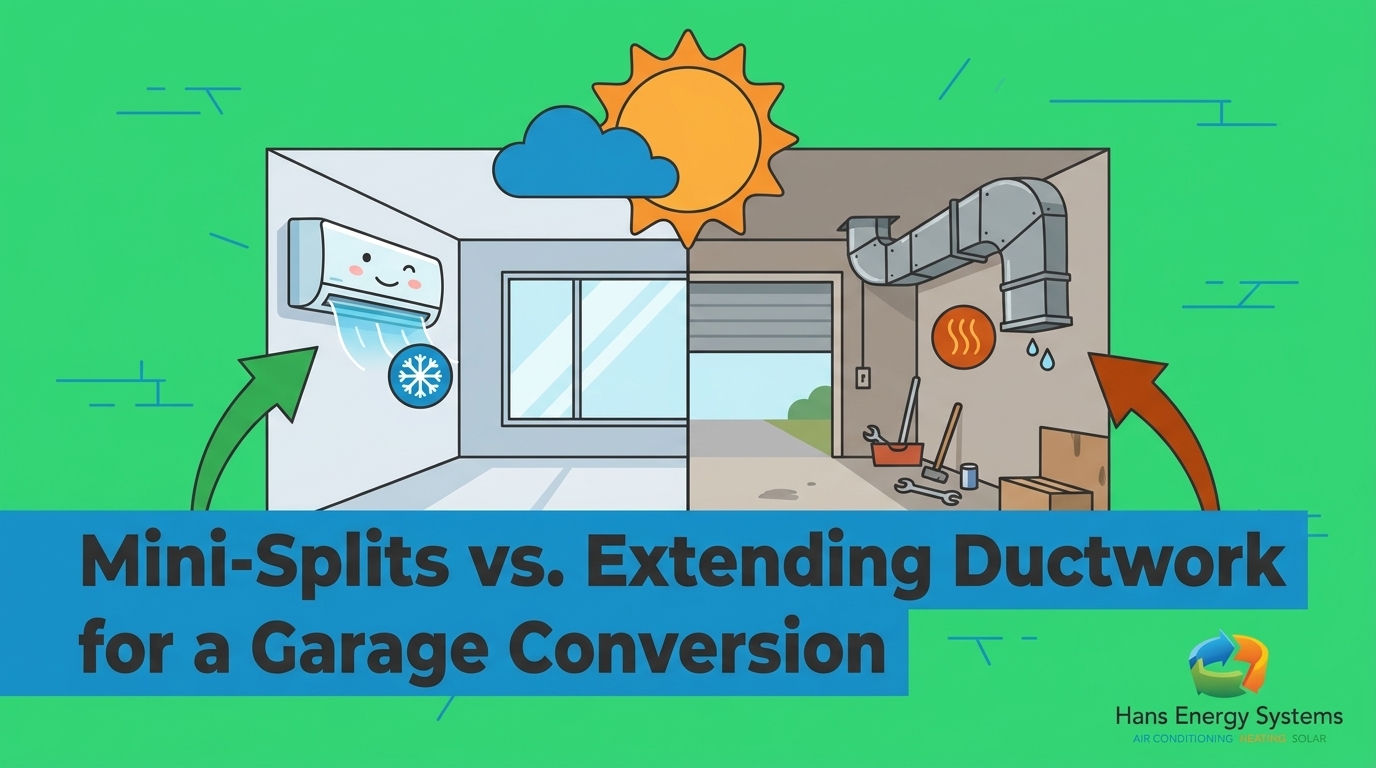
- The “Bonus” Room Over the Garage: These rooms are notorious for being too hot. Because they are surrounded by outdoor air on almost all sides, they need their own dedicated climate control. A Garage Mini Split can turn a sweltering storage space into a comfortable home office or gym.
- Finished Attics and Basements: These spaces are often at the extreme ends of the duct run. A ductless unit provides the “surgical” cooling needed to make these spaces livable.
The Secondary Benefits of Going Ductless
Beyond just fixing that one annoying room, mini splits offer perks that central air simply can’t match.
| Feature | Window Unit | Central HVAC | Mini Split |
|---|---|---|---|
| Noise Level | Loud (50-60 dB) | Moderate (Duct noise) | Whisper Quiet (19 dB) |
| Efficiency | Low | Moderate | Very High |
| Air Quality | Basic Filter | Standard Filter | Multi-stage Filtration |
| Installation | Temporary/Insecure | Invasive/Expensive | Permanent/Minimal |
The quiet operation is perhaps the most surprising benefit. At roughly 19 decibels, a mini split is quieter than a whisper. You’ll notice the comfort long before you notice the sound. If you ever find yourself asking Why Is My Ductless Ac Making Strange Noises, it’s usually a sign that a simple filter cleaning is overdue, not that the machine is naturally loud.
Additionally, the indoor air quality benefits are significant. Because there are no ducts to collect dust, pet dander, or mold, the air stays cleaner. Most units feature multi-stage filtration that can capture allergens, which is a huge plus during San Diego’s pollen seasons.
Installation and Maintenance for Long-Term Comfort
One of the biggest hurdles for homeowners is the fear of a messy renovation. Fortunately, mini split installation is remarkably “low-impact.” We typically only need to drill one small 3-inch hole to connect the indoor unit to the outdoor condenser using slim refrigerant lines and power cables.
Most installations can be completed in a single day. You can follow our Ductless Mini Split Installation Guide 2025 to see exactly how we map out the zones for maximum efficiency.
To keep your system running for the next 15 to 20 years, maintenance is key but simple:
- Clean the filters: You should pop the front panel and rinse the filters every few weeks.
- Keep the outdoor unit clear: Ensure no leaves or debris block the airflow of the condenser.
- Watch for leaks: While rare, a Mini Split Leaks Complete Guide can help you identify if your system needs a professional touch. If you ever see a Mini Split Leaking Water, it’s usually just a clogged condensate drain that we can clear in minutes.
Frequently Asked Questions about Uneven Home Temperatures
Why is one room in my house always hotter than the rest?
It usually comes down to a combination of distance from the HVAC unit, solar exposure, and poor air balancing. If a room has vaulted ceilings or large windows, it naturally requires more cooling power than a hallway. If your central system delivers the same amount of air to both, the “difficult” room will always stay warmer.
Can a mini split really heat my home in the winter?
Absolutely. In fact, ductless heat pumps are up to 70% more efficient than electric baseboard heaters. Even in the relatively mild winters of San Marcos or Escondido, a mini split provides a much more consistent, wrap-around warmth than a traditional furnace that cycles on and off.
How long does it take to install a ductless system?
For a single-zone system (one indoor unit), we can usually have you up and running in about 4 to 6 hours. Multi-zone systems take a bit longer, but the process is still far less invasive than trying to retro-fit new ductwork into an existing home.
Conclusion
At Hans Energy Systems, we believe you shouldn’t have to choose which rooms in your house are comfortable. Whether you’re dealing with a “sauna” of a sunroom in Chula Vista or a “freezer” of a basement in Scripps Ranch, how mini splits solve hot and cold spots in your home is the most efficient answer available in 2026.
We take pride in providing reliable, quick, and expert service to our neighbors throughout the San Diego area. From the initial consultation to the final professional commissioning, our goal is to ensure your home is a sanctuary of consistent comfort. Ready to reclaim that one room you’ve been avoiding? Explore our Hvac/Poway Ca/Ductless Ac services and let’s get your home back in balance.