
When Your AC Won’t Turn On: Quick Checks Before You Call Anyone
AC troubleshooting tips before calling a pro can save you time and a lot of frustration — especially during a San Diego heat wave when every hour without cool air counts.
Before you schedule a service call, run through these five quick checks:
- Thermostat — Is it set to “Cool” with the fan on “Auto” and the temperature at least 3–5 degrees below room temp? Are the batteries dead?
- Circuit breaker — Is the AC breaker tripped? Flip it fully off, wait 30 seconds, then flip it back on.
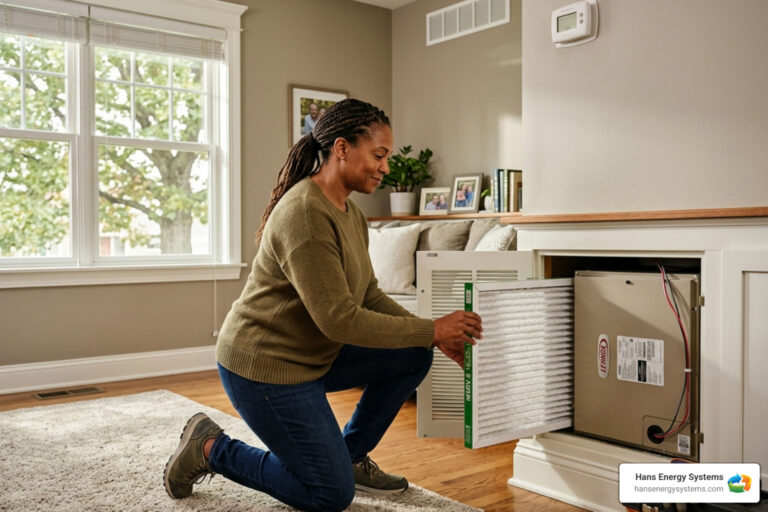
- Air filter — Hold it up to light. If you can’t see through it, replace it. A clogged filter is the #1 cause of AC problems.
- Outdoor unit — Is the disconnect switch on? Is there at least 2 feet of clear space around the unit?
- Condensate drain line — Is there standing water in the drain pan? A clogged line can trigger a safety shutoff.
Most of the time, one of these five things is the culprit. In fact, nine out of ten central AC performance issues trace back to something as straightforward as a dirty filter or a tripped breaker. Water leaks from clogged drain lines account for nearly 90% of all central AC service calls — and many of those are fixable with a wet/dry vacuum and a splash of white vinegar.
That said, some problems — like refrigerant leaks, electrical odors, or grinding noises — do need a professional right away. This guide will help you tell the difference.

Essential ac troubleshooting tips before calling a pro in Poway
It is May 2026, and the San Diego sun is starting to show its strength. When you go to click that thermostat and nothing happens, it’s easy to feel “hot and bothered.” However, your AC system is a complex network of electrical and mechanical parts that rely on a steady flow of power. Before assuming the motor has given up the ghost, we need to look at the power supply.

In many Common AC Problems in Poway and Solutions, the issue isn’t a broken part, but a safety feature that has done its job. Your HVAC system typically runs on two separate circuits: one for the indoor air handler and a high-voltage circuit (usually 220-240 volts) for the outdoor condenser.
First, check your main electrical panel. Breakers don’t always flip to the “Off” position when they trip; often, they hang out in a “middle” position. To the untrained eye, it looks fine, but the connection is severed. You must flip it completely to the “Off” position before clicking it back to “On.”
Don’t forget the other power toggles. There is usually a “light switch” style toggle near your indoor furnace or air handler. It’s surprisingly common for someone to accidentally flip this off while reaching for a Christmas decoration or cleaning the utility closet. Additionally, check the outdoor disconnect box located near your condenser unit. These can be bumped during yard work or even by children playing outside.
Checking your thermostat: Basic ac troubleshooting tips before calling a pro
The thermostat is the “brain” of your cooling system. If the brain isn’t communicating, the body won’t move. If your screen is blank, the first thing to do is replace the batteries. Even if the screen looks lit, low batteries can prevent the unit from sending a strong enough signal to the relay.
Next, verify your settings. It sounds simple, but we’ve seen many service calls resolved just by switching the mode from “Heat” to “Cool.” Also, check the fan setting. If you set the fan to “On,” it will blow air constantly, even when the compressor isn’t running. This leads to lukewarm air blowing through your vents during the “rest” cycles. Setting it to “Auto” ensures the fan only blows when the air is actually being cooled.
Finally, be patient. Most modern thermostats have a built-in 3-to-5-minute delay. This is a protective feature designed to prevent “short cycling,” which can damage the compressor if the power is toggled too quickly. If you just adjusted the temp, give it five minutes before you panic.
Inspecting the circuit breaker and power toggles
If you find a tripped breaker, follow the 30-second rule. Switch it off, wait 30 seconds to allow any residual electricity to dissipate, and then flip it back. If the breaker trips again immediately, stop troubleshooting. A breaker that won’t stay on is a clear sign of a short circuit or a failing component drawing too many amps. Continuing to reset it could lead to an electrical fire.
For those in areas like Rancho Bernardo or Escondido, where summer heat can put a massive strain on the grid, power surges are common. These surges often trip the outdoor shutoff or blow a fuse in the disconnect box. If you’re comfortable, you can check these fuses, but if you see any charred wires or smell a “burnt” odor, it’s time to call in the experts.
Inspecting Airflow and Filter Health
If your AC is turning on but not cooling your home, or if it keeps shutting off after only a few minutes, you likely have an airflow problem. We like to say that the air filter is the “lungs” of your HVAC system. Trying to run your AC with a dirty filter is like trying to run a marathon while breathing through a thick wool sock.
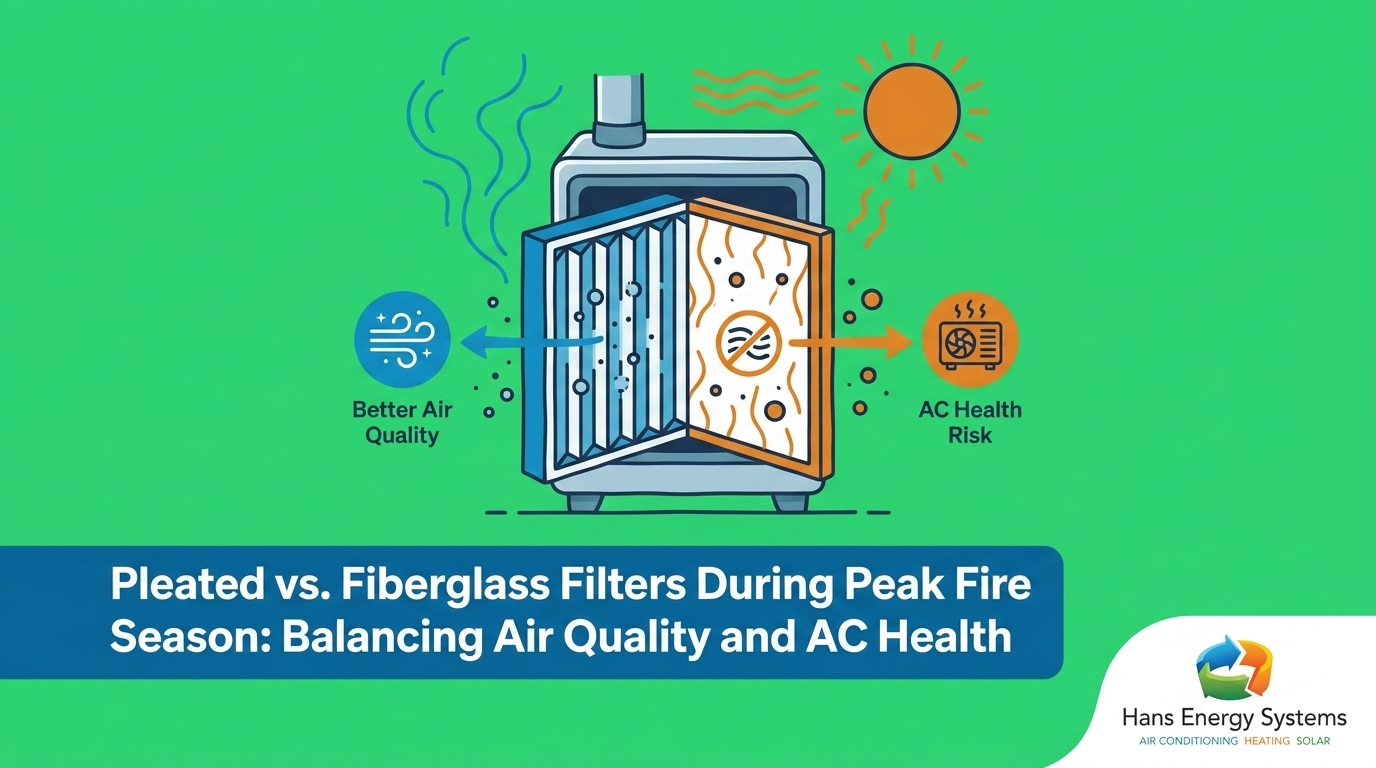
We cannot stress this enough: Dirty Air Filters Can Harm AC Efficiency more than almost any other factor. When the filter is clogged, the blower motor has to work twice as hard to pull air through. This leads to system strain and eventually, a total system shutdown.
Filter Replacement Intervals
How often should you change yours? It depends on the thickness:
- 1-inch filters: Every 30 days (especially if you have pets).
- 2-inch filters: Every 60 days.
- 4-to-5-inch media filters: Every 6 to 12 months.
If you live in a high-dust area or have furry friends in the house, check your filter monthly regardless of the “rated” lifespan. A quick test: hold the filter up to a light bulb. If you can’t see the glow of the light through the material, it’s time for a new one.
Identifying and thawing frozen evaporator coils
One of the most counterintuitive things about AC units is that they can actually freeze over in the middle of a 90-degree San Diego day. When airflow is restricted (usually by that dirty filter we keep mentioning), the refrigerant in the evaporator coils gets too cold. Humidity in the air then settles on the coils and turns to ice.
If you see ice on the copper lines leading into your unit, or if you notice frost on the indoor coil cabinet, you need to act fast. When AC Starts Short Cycling in Poway, a frozen coil is often the culprit.
How to thaw it safely:
- Turn the AC “Off” at the thermostat.
- Turn the Fan setting to “On.” This blows warm house air over the ice to melt it naturally.
- Wait 2 to 5 hours. Do not try to chip the ice off with a knife or screwdriver; you will almost certainly puncture the refrigerant lines, leading to a major repair.
- Replace the air filter before restarting the system.
Managing the Outdoor Condenser and Drainage
Your outdoor unit (the condenser) is responsible for releasing the heat collected from inside your home. If it’s buried under leaves, overgrown bushes, or “treasures” stored on the side of the house, it can’t breathe.
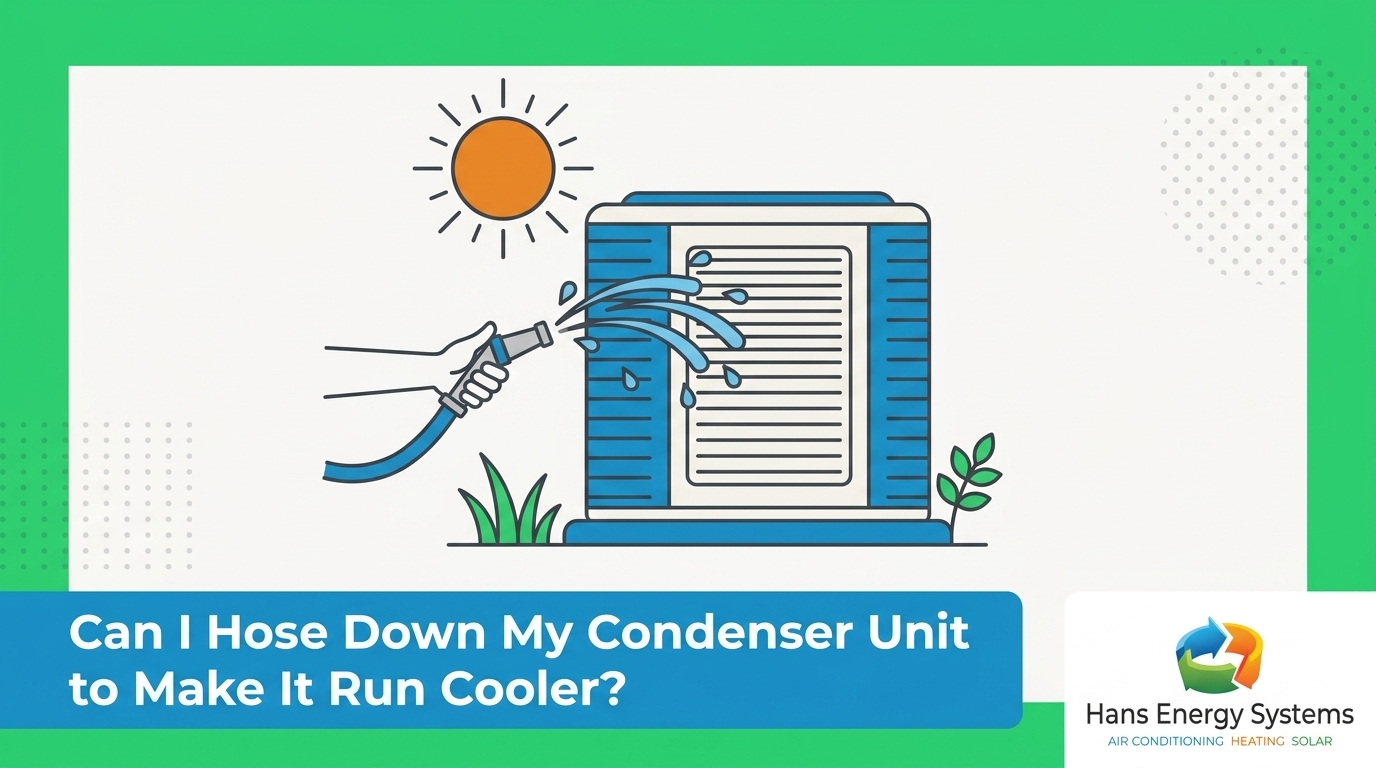
Take a walk outside and ensure there is at least a 2-foot “clear zone” around the entire unit and 5 feet of clearance above it. If the aluminum fins are caked in dirt, pollen, or “cottonwood fuzz,” you can gently hose them down. Use a regular garden hose—never a pressure washer, as high pressure will flatten the delicate fins and permanently restrict airflow.
Beyond airflow, we have to talk about water. Your AC doesn’t just cool the air; it dehumidifies it. That moisture has to go somewhere, and that “somewhere” is the condensate drain line.
Clearing the drain line: Advanced ac troubleshooting tips before calling a pro
In the San Diego area, Why is my AC unit leaking water in Poway is a common question. Most of the time, the answer is a clogged PVC pipe. Algae and “sludge” love to grow in the damp environment of your drain line.
Most modern systems have a “float switch” or safety sensor. If the water backs up because of a clog, the switch flips and kills power to the entire system to prevent a flood in your home. If you see standing water in the secondary drain pan under your indoor unit, you’ve found your problem.
| Method | DIY Effort | Effectiveness |
|---|---|---|
| Vinegar Flush | Low | Great for prevention; kills algae. |
| Wet/Dry Vac | Medium | Excellent for pulling out stubborn clogs. |
| Professional Flush | None | Uses high-pressure CO2 to clear the entire line. |
To clear it yourself, find the exit point of the PVC pipe outside. Attach a wet/dry vacuum to the end of the pipe (you can use a wet rag to create a seal) and run it for about 30 seconds. You’ll be surprised—and perhaps a little grossed out—by what comes out. Once cleared, pour a quarter-cup of distilled white vinegar into the drain line access point near the indoor unit to keep it clean.
Recognizing Warning Signs That Require an Expert
While we love empowering homeowners to handle the basics, some things are simply too dangerous or complex for a DIY fix. If you’ve checked the power, the filter, and the drain line and the unit still won’t behave, it’s time for professional assistance.
Call a pro immediately if you notice:
- Refrigerant Leaks: If you see oily residue on the connections or hear a persistent hissing sound, you likely have a leak. Handling refrigerant requires professional expertise.
- Electrical Odors: If it smells like burning plastic or “fishy” electrical smoke, shut the power off at the breaker and call us. This indicates a short circuit or a failing wire.
- Strange Noises: Why your AC unit makes buzzing sounds can range from a simple loose screw to a failing capacitor. However, metal-on-metal grinding or loud “clanging” usually means a fan blade is loose or the compressor is failing.
- Constant Tripping: If the breaker trips more than once, don’t try a third time.
Ignoring these Warning Signs AC Needs Replacement in Poway can turn a simple repair into a total system failure. It is always better to address a minor issue before it leads to a complete breakdown.
Frequently Asked Questions about AC Troubleshooting
Why is my AC blowing warm air instead of cold?
First, check your thermostat settings to ensure the fan is on “Auto” and not “On.” If that’s correct, check your outdoor unit. If the fan is spinning but the air coming out of the top isn’t warm, the compressor might not be engaging. This could be due to a failed capacitor or a need for an AC Freon Recharge. ACs don’t “use up” Freon like a car uses gas; if it’s low, you have a leak that needs to be fixed.
How often should I actually change my air filter?
As a general rule, every 3 months. However, if you live in a dusty part of Santee or have three Golden Retrievers in La Jolla, you should check it every 30 days. High-quality MERV-rated filters catch more particles but also clog faster, so keep a close eye on them to maintain your indoor air quality.
What does a buzzing or clicking sound mean?
A clicking sound followed by silence usually indicates a failed capacitor—the “battery” that gives the motor the jolt it needs to start. A buzzing sound can be a contactor (an electrical switch) that is chattering or failing. Both are common, relatively quick fixes for a professional but dangerous for a DIYer due to the high voltage stored in the components.
Conclusion
At Hans Energy Systems, we believe that a little knowledge goes a long way. By following these ac troubleshooting tips before calling a pro, you can often restore your home’s comfort in under 30 minutes. Whether you are in Poway, Chula Vista, or Carlsbad, being your own “AC detective” is the best way to keep your system running efficiently.
However, if your DIY efforts haven’t brought the cool air back, don’t sweat it. We are here to provide the reliability and exceptional service San Diego families have trusted for years. From a simple AC Tune Up Poway to complex emergency repairs, we’ve got you covered.
Schedule your professional AC service in Poway now to get your comfort back on track!