
I’m looking for an air conditioner maintenance checklist before summer heat. Who in San Diego provides reliable pre-season tune-ups?
An air conditioner maintenance checklist before summer heat is the single most effective way to avoid a breakdown on the hottest day of the year. Here in San Diego, that day comes fast — and when it does, HVAC technicians are swamped and wait times stretch out.
The good news? Most of the damage is preventable. A system that sits idle all winter accumulates dust, debris, and wear that quietly chips away at efficiency. By the time you need your AC most, small ignored problems can turn into significant mechanical failures.
Here’s a quick pre-summer AC maintenance checklist to get you started:
- Replace or inspect the air filter — every 1 to 3 months during heavy use
- Clear debris around the outdoor condenser unit — maintain at least 2 feet of clearance on all sides
- Flush the condensate drain line — pour distilled white vinegar down the access point to prevent algae clogs
- Test the thermostat in cooling mode — set it a few degrees below room temperature and listen for the system to engage
- Check vents and registers — make sure none are blocked by furniture or clogged with dust
- Inspect the outdoor unit and coils — rinse gently with a garden hose (never a pressure washer)
- Schedule a professional tune-up — have a technician check refrigerant levels, electrical connections, and the evaporator coil
Nearly 90% of U.S. households rely on air conditioning, and most AC failures happen not because the equipment is bad — but because basic seasonal maintenance was skipped. A little preparation now means reliable, efficient cooling all summer long.

Essential DIY Air Conditioner Maintenance Checklist Before Summer Heat
As we move into May 2026, the San Diego sun is starting to show its strength. Before the first major heat wave hits Poway or Del Mar, there are several tasks you can handle yourself to ensure your home stays a sanctuary of cool air. DIY maintenance isn’t just about efficiency; it’s about understanding how your system breathes.
The most impactful step you can take is checking your air filter. We often see that Dirty Air Filters Can Harm AC Efficiency by forcing the blower motor to work twice as hard to pull air through a wall of dust. Simply replacing a clogged, grey filter with a fresh, pleated one can result in 5% to 15% energy savings. If you have pets or live in areas prone to dust, like Scripps Ranch or Lakeside, you should be checking these monthly.
Another critical DIY task is maintaining the condensate drain line. This is the unglamorous PVC pipe that carries moisture away from your indoor unit. Over time, algae and mold can grow inside, leading to clogs that cause water to back up into your home. A simple fix? Pour half a cup of distilled white vinegar down the drain line’s access point. This kills organic growth before it turns into a “no-cool” service call.
To help you decide what to tackle yourself and what to leave to our team at Hans Energy Systems, refer to the table below:
| Maintenance Task | DIY Friendly? | Frequency | Why It Matters |
|---|---|---|---|
| Filter Replacement | Yes | Every 1-3 Months | Boosts airflow and IAQ |
| Clearing Outdoor Debris | Yes | Monthly in Spring | Prevents unit overheating |
| Flushing Drain Line | Yes | Twice Yearly | Prevents water damage |
| Cleaning Evaporator Coil | No | Annually | High risk of fin damage |
| Checking Refrigerant | No | Annually | Requires specialized handling |
| Electrical Testing | No | Annually | High voltage safety risk |
Why clearing debris is part of your air conditioner maintenance checklist before summer heat
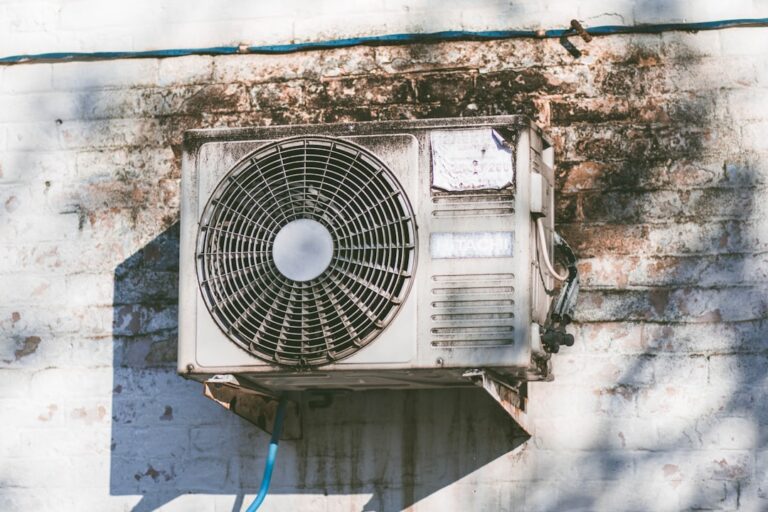
Your outdoor condenser unit is essentially the “lungs” of your AC system. It needs to exhale heat to the outside air. If it’s buried under last season’s leaves, overgrown hibiscus, or decorative fencing, it can’t breathe. We recommend maintaining at least a two-foot clearance around the entire unit.
Airflow restriction is a silent killer for compressors. When heat can’t escape, the system runs longer and hotter, which can lead to a premature failure of the compressor. During your spring cleanup in La Jolla or Poway, trim back any vegetation and use a garden hose to gently rinse the condenser fins. Safety tip: Always shut off the power at the outdoor disconnect box before using water near the unit. Never use a pressure washer, as the high-pressure stream will flatten the delicate aluminum fins, permanently ruining the airflow.
Maximizing Airflow and Thermostat Accuracy
Even if your AC unit is brand new, it relies on a complex network of ducts and a sensitive thermostat to do its job. In May 2026, as we prepare for the peak cooling season, ensuring these components are in sync is vital for your comfort.
A professional AC System Check often reveals that ductwork is the “weakest link” in a home’s cooling. In fact, leaky ducts can account for a 20% to 30% loss of conditioned air before it ever reaches your bedroom. If your home in Rancho Bernardo or Oceanside feels unevenly cooled, duct leaks are a likely culprit. For more insights on how your home’s infrastructure affects your comfort, check out our HVAC Resources Poway CA page.
Testing your thermostat as part of an air conditioner maintenance checklist before summer heat
Your thermostat is the brain of your HVAC system. If the brain is confused, the body won’t work. Before the first triple-digit day hits Santee or El Cajon, perform a “cooling mode test.”
- Switch to Cool: Set the thermostat to cooling mode.
- Drop the Temp: Lower the target temperature about 5 degrees below the current room temperature.
- Listen and Feel: You should hear the indoor blower kick on almost immediately, followed by the outdoor unit. Within a few minutes, the air coming from the vents should feel crisp and cold.
If there is a significant delay, or if the system “short cycles” (turns on and off rapidly), you may need a calibration check. Don’t forget the simplest fix: replace the batteries! Most thermostats require a fresh set of AAs once a year. This is also a great time to consider an upgrade. Smart thermostats play a huge role in modern efficiency, allowing you to program schedules that save energy while you’re at work in Downtown San Diego, and cooling the house down just before you arrive home.
Professional Tune-Ups and Technical Inspections
While DIY tasks are great for routine care, there are technical elements that require a professional touch. A Hans Energy Systems technician brings tools and expertise that the average toolbox just doesn’t hold. When we perform an HVAC Service in Poway CA, we go deep into the mechanical heart of your system.
Our professional tune-up includes:
- Electrical Connection Inspection: We tighten loose connections and measure voltage and current on motors. Loose connections are a leading cause of parts failure and even fire hazards.
- Capacitor Testing: The capacitor is like a giant battery that gives your AC the “kick” it needs to start. These often fail during heat waves because they overheat. We test them to ensure they are within the manufacturer’s specified range.
- Blower Motor Lubrication: Reducing friction in moving parts lowers energy consumption and prevents the motor from burning out.
- Evaporator Coil Cleaning: Located inside your home, this coil gets damp and cold, making it a magnet for dust. A dirty coil reduces the system’s ability to remove heat and humidity.
- Refrigerant Charge Verification: Refrigerant is not “fuel” — it doesn’t get used up. If your levels are low, it means you have a leak. Handling refrigerant requires specific training and authorization. If we find a leak, we can discuss an AC Freon Recharge after the leak is repaired to ensure your system operates at peak efficiency.
Deciding Between AC Repair and Replacement
No air conditioner lasts forever. In our San Diego climate, a well-maintained central air unit typically has a lifespan of 10 to 15 years. If your system is approaching its second decade, you might find yourself at a crossroads: do you keep fixing it, or is it time for something new?
We often recommend evaluating the age of your unit against the frequency and nature of repairs. If a unit is older and requires frequent attention, a replacement is usually the smarter long-term move.
Compressor failure is a major event in the HVAC world. If you’re seeing Signs Home is Ready for New AC Installation, such as decreased performance or frequent breakdowns, it might be time to upgrade. Modern systems have much higher SEER (Seasonal Energy Efficiency Ratio) ratings, meaning they provide more cooling for less electricity. If you’re ready to explore a more reliable future, our guide on AC Installation Poway CA can help you navigate the process. You can also check When to Replace Your AC System in Poway for more localized advice.
Frequently Asked Questions about Summer AC Prep
How often should I replace my air filters during a San Diego summer?
During a typical San Diego summer, you should replace your filters every one to three months. However, if you live in a high-pollen area like Encinitas or have pets that shed, check them every 30 days. When the AC runs constantly to battle a July heat wave, it pulls more air (and more dust) through the filter than it does in the spring. Using a filter with a MERV rating between 8 and 11 is usually the “sweet spot” for residential homes — providing great filtration without suffocating your blower motor.
What are the signs that my AC has low refrigerant levels?
Common signs include the system blowing warm air, hissing or bubbling sounds near the refrigerant lines, or ice forming on the outdoor copper pipes or the indoor evaporator coil. Your AC is a closed-loop system. Low refrigerant is always a sign of a leak. Because refrigerants are regulated chemicals, you must have a professional handle any testing or recharging.
Is maintenance necessary for a brand-new AC system?
Absolutely! In fact, most manufacturers require documented annual maintenance by a licensed professional to keep your warranty valid. Beyond the warranty, maintenance ensures your new investment stays at the high efficiency level you expected. Think of it like a new car — you wouldn’t skip the first few oil changes just because the car is new. Regular service preserves the system’s “balance” and prevents the gradual performance drift that leads to system strain.
Conclusion
Preparing for a San Diego summer shouldn’t be a stressful experience. By following this air conditioner maintenance checklist before summer heat, you’re taking proactive steps to protect your home’s comfort. From the simple DIY task of changing a filter to the technical precision of a professional tune-up, every bit of effort helps ensure your AC is ready to tackle the heat.
At Hans Energy Systems, we pride ourselves on being the reliable choice for home comfort in Poway and across San Diego County. Whether you need a quick system check or a comprehensive AC System Check, our team is here to ensure you don’t break a sweat this summer. Don’t wait for the first heat wave to find out your system is struggling – schedule your pre-summer maintenance today and enjoy the peace of mind that comes with a job well done.