
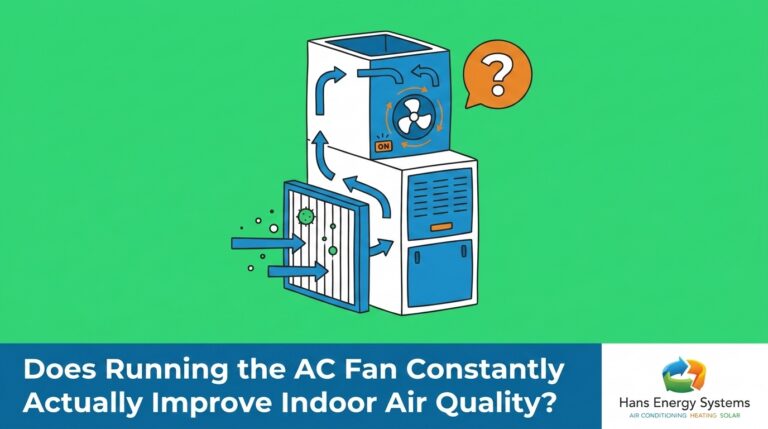
The Constant Circulation Dilemma: Balancing Filtration and Comfort
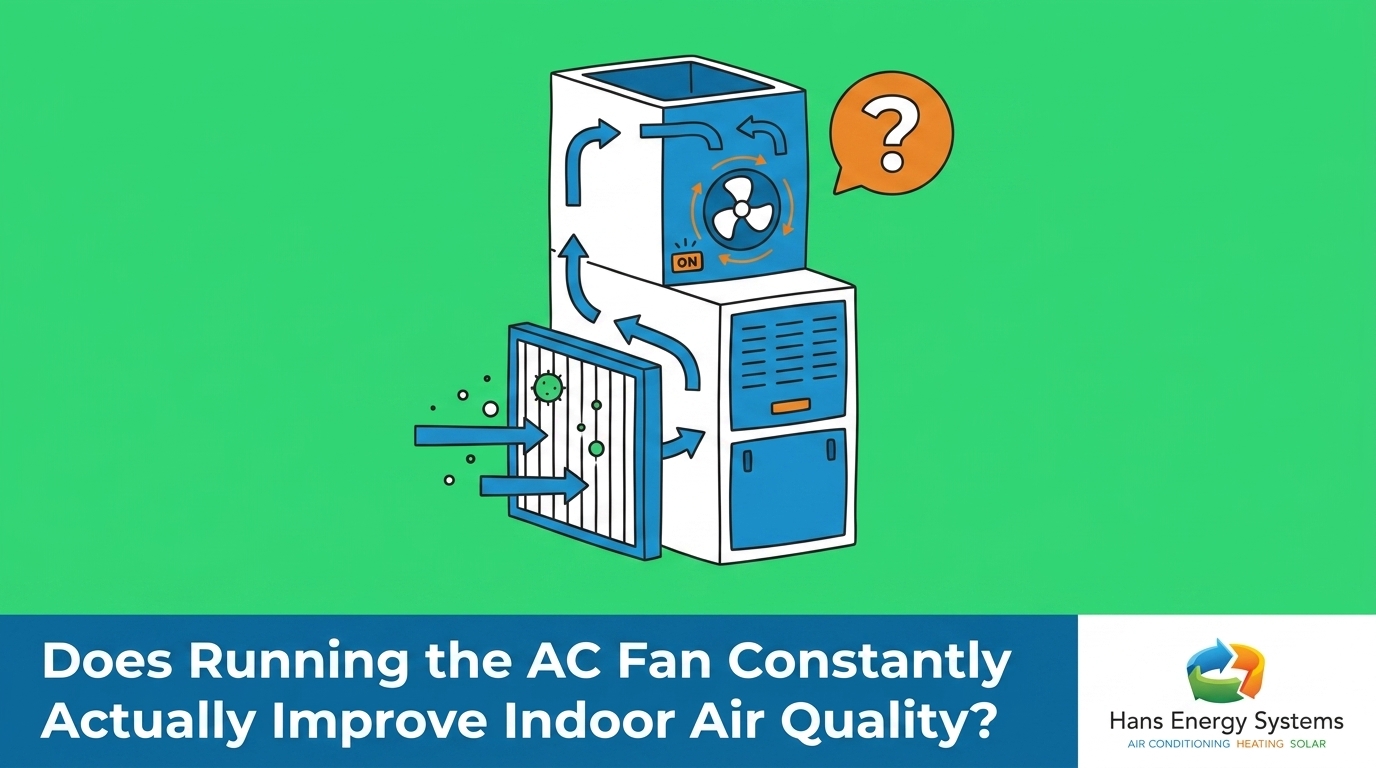
Is leaving your thermostat fan set to the “ON” position the secret to cleaner air, or are you just trading one indoor air quality problem for another? If you find yourself asking, does running the AC fan constantly actually improve indoor air quality?, you are certainly not alone. At Hans Energy Systems, our technicians field this exact question almost daily during the peak summer months. Many homeowners assume that forcing air through the system’s filter twenty-four hours a day is the most effective way to eliminate airborne particulates, dust, and environmental pollutants.
The short answer is: While setting the fan to “ON” does filter air continuously, it can actually degrade overall indoor air quality by increasing humidity and pulling in unconditioned air, making “AUTO” the generally preferred default.
This creates a difficult decision point for anyone trying to balance the desire for continuous air filtration against the hidden drawbacks of humidity spikes and energy waste. In the Poway inland valley, where peak summer heat makes homeowners desperate for effective indoor air solutions, understanding how your thermostat settings interact with your equipment is critical. If you are looking to optimize your HVAC and energy system services, mastering this simple switch is the foundational first step.
How the ‘ON’ Setting Impacts Airborne Particulates
To understand why this debate exists, we first have to look at the mechanical benefits of continuous fan operation. Your HVAC system consists of two primary functions during the summer: the outdoor compressor that actually cools the refrigerant, and the indoor blower motor that pushes air through your ductwork.
When you set your thermostat fan to “AUTO,” the blower motor only activates when the outdoor compressor is running to cool the house. Once the target temperature is reached, the entire system shuts down. When you switch the fan to “ON,” the indoor blower motor runs continuously, regardless of whether the system is actively cooling the air. This means that 100% of the time, the air inside your home is being pulled through return grilles, pushed through the air filter, and redistributed through the supply vents.
During late summer and wildfire season, a pattern we see often is homeowners relying on this constant circulation to prevent air from stagnating in isolated rooms and to ensure that any airborne smoke or dust is constantly directed toward filtration media. However, this mechanical advantage comes with significant caveats.
The Role of MERV Ratings in Continuous Operation
Continuous airflow only improves indoor air quality if the filter installed in your system is actually capable of trapping the targeted contaminants. Air filters are graded on the Minimum Efficiency Reporting Value (MERV) scale.
- MERV 1-4 (Standard Fiberglass): These filters are designed solely to protect the HVAC equipment from large debris like pet hair and heavy dust bunnies. Running the fan constantly with a fiberglass filter will do absolutely nothing to improve your indoor air quality or remove fine particulates.
- MERV 8 (Standard Pleated): This is the minimum standard for capturing common household dust and pollen. Constant circulation will help reduce surface dust, but it still struggles with microscopic pollutants.
- MERV 11-13 (High Efficiency): These filters are dense enough to capture fine particulate matter, including smoke, smog, and pet dander.
The catch is that higher MERV filters restrict airflow significantly. Forcing your blower motor to pull air through a dense MERV 13 filter twenty-four hours a day puts immense static pressure on the system, forcing the motor to work incredibly hard just to move air. This strain is one of the primary reasons why our team rarely recommends universal continuous operation.
The Hidden Drawback: Re-Evaporation and Indoor Humidity
The most significant argument against leaving your fan set to “ON” involves how your air conditioner handles moisture. An air conditioner does not just lower the temperature of the air (sensible cooling); it also removes moisture from the air (latent cooling).
In our years of optimizing cooling performance in the Poway inland valley, we’ve found that peak summer temperatures make any re-introduced humidity from the AC coil feel highly uncomfortable, completely negating the cooling effect of the system. Here is the exact mechanical breakdown of why continuous fan operation ruins indoor humidity control:
- The Cooling Cycle Begins: The thermostat calls for cooling. The compressor turns on, and the indoor evaporator coil gets ice-cold.
- Condensation Forms: Warm, humid indoor air is blown over this freezing coil. The moisture in the air condenses onto the metal fins of the coil, just like water droplets forming on the outside of a cold glass of iced tea on a hot day.
- Moisture Drains: This condensation drips down into a drain pan and flows safely outside your home.
- The Cycle Ends: The thermostat reaches the desired temperature and shuts off the outdoor compressor.
- The Re-Evaporation Effect: If your fan is set to “AUTO,” the blower motor shuts off, allowing the remaining moisture on the coil to slowly drain away. If your fan is set to “ON,” the blower motor keeps pushing warm household air over that wet, now-warming evaporator coil.
This continuous airflow acts like a giant blow dryer aimed at a wet sponge. It picks up all the residual moisture sitting on the coil and evaporates it right back into your living space.
Why Re-Evaporation Ruins Indoor Comfort
When moisture is pushed back into the home, indoor humidity levels spike. High humidity makes the air feel muggy, sticky, and significantly warmer than the thermostat actually reads. Human bodies cool themselves through the evaporation of sweat. When the indoor air is already saturated with moisture from your AC coil, your sweat cannot evaporate, leaving you feeling hot and uncomfortable even if the ambient temperature is 72 degrees. While you might be filtering out a bit more dust by running the fan constantly, the resulting high humidity creates a completely different, and often worse, set of indoor air quality and comfort issues.

Unconditioned Air and Ductwork Vulnerabilities
Beyond humidity control, running the fan constantly interacts with the physical condition of your ductwork to heavily influence indoor air quality. When our team inspects local HVAC setups, a pattern we see often is that ductwork systems are rarely perfectly sealed. Over time, extreme temperature fluctuations, settling foundations, and degrading mastic tape can cause small leaks, gaps, and cracks in the duct runs.
When you set the fan to “ON,” you create constant static pressure within that ductwork system. The supply ducts (which push air into the rooms) are under positive pressure, while the return ducts (which pull air back to the unit) are under negative pressure.
If there are any minor leaks in the return ducts—which are frequently located in unconditioned spaces like blazing hot attics, dusty crawlspaces, or wall cavities—the system acts like a giant vacuum cleaner. The continuous negative pressure pulls in unconditioned, dirty air from these spaces twenty-four hours a day.
The Impact on Airborne Contaminants
During late summer or wildfire season, pulling in air from an unsealed attic means you are constantly introducing attic dust, fiberglass insulation particles, and outdoor smoke directly into your living space. This completely counteracts the filtration benefits of running the fan in the first place.
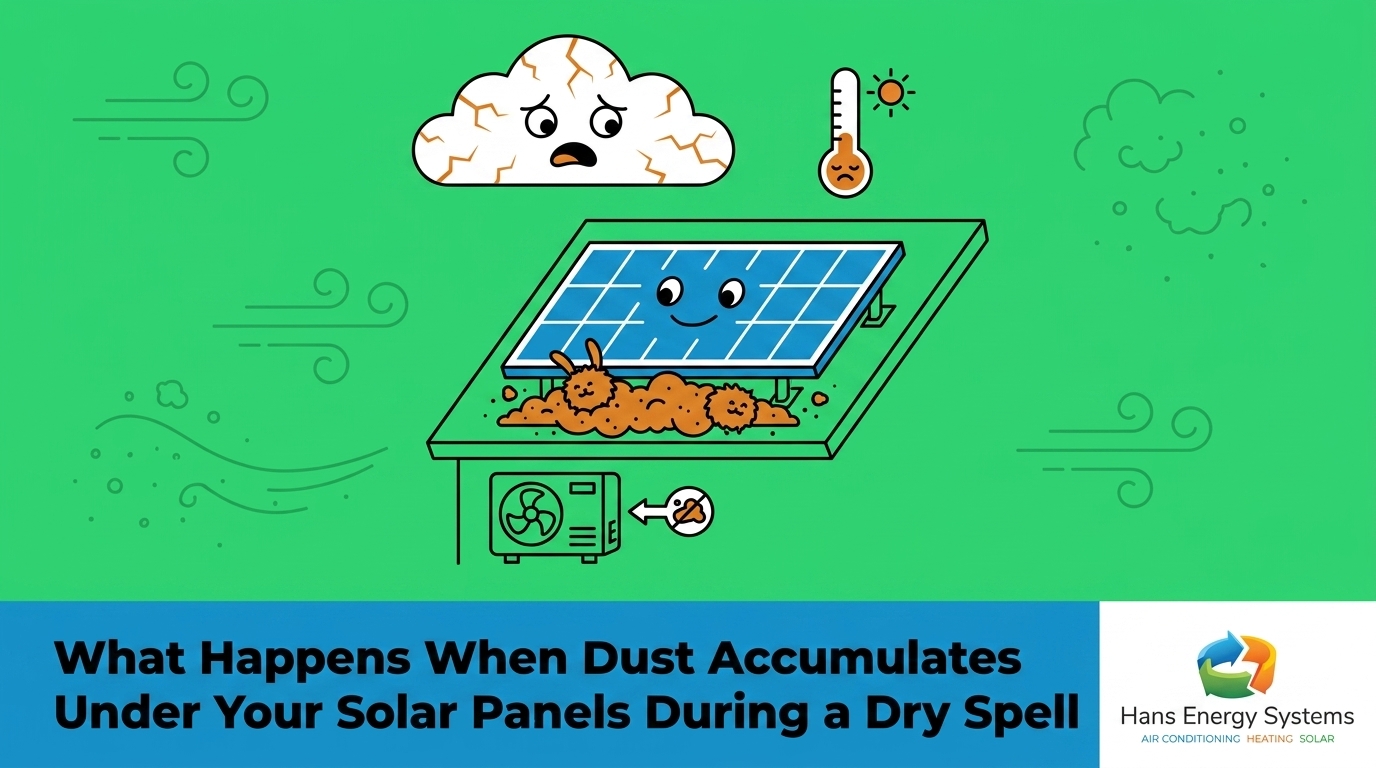
Furthermore, if you are already dealing with dust accumulation during dry spells, running the fan constantly with leaky return ducts will only exacerbate the problem. Instead of filtering the air that is already inside your home, you are actively importing new dust and allergens from outside the conditioned envelope. This dynamic forces the system’s filter to clog much faster and makes the air conditioner work significantly harder to cool the newly introduced hot attic air.
Blower Motor Wear and Energy Consumption
As HVAC professionals, we cannot ignore the mechanical wear-and-tear aspects of the ON versus AUTO debate. Blower motors are robust pieces of equipment, but they are still mechanical devices with finite lifespans. We frequently replace blower motors that have suffered premature failure simply because they were forced to operate for 720 hours a month instead of the typical 200 to 300 hours during standard cooling cycles. This constant usage accelerates bearing wear, belt degradation (in older models), and electrical component fatigue.
Energy consumption also plays a massive role, especially in the Poway inland valley where heavy summer usage already strains AC units. The financial impact depends heavily on the type of blower motor installed in your HVAC system.
| Motor Type | Energy Consumption (Continuous) | Wear and Tear Impact | Filtration Suitability |
|---|---|---|---|
| PSC (Permanent Split Capacitor) | High. Can add significant costs to monthly electrical bills if run 24/7. Operates at a single, high speed. | High. Continuous high-speed operation accelerates mechanical failure and overheating risks. | Poor. Pushes air too fast for optimal filtration and maximizes re-evaporation of moisture. |
| ECM (Electronically Commutated Motor) | Low to Moderate. Uses far less electricity and can operate at lower, variable speeds when not actively cooling. | Moderate. Designed for longer runtimes, but 24/7 operation still shortens the overall lifespan compared to AUTO. | Better. Lower speeds allow for better particulate capture and slightly less moisture re-evaporation. |
Ultimately, homeowners must weigh the trade-off: paying significantly more in electricity and accelerating equipment replacement timelines for what are often marginal filtration gains.
The Definitive Rule of Thumb: When to Use ON vs. AUTO
Navigating indoor air quality requires honest, reliable HVAC expertise that prioritizes the long-term health of your system over quick, temporary fixes. While it is tempting to use the thermostat fan switch as a cure-all for dust and allergens, the mechanics of humidity and duct pressure tell a different story.
Based on our extensive experience servicing Poway homes, we strongly recommend “AUTO” as your standard default setting. This ensures optimal humidity control, maximizes energy efficiency, and protects the lifespan of your blower motor. However, there are specific, temporary exceptions where switching to “ON” is highly beneficial.
- During Active Cleaning: Turn the fan to “ON” while vacuuming, dusting, or sweeping. These activities kick up heavy amounts of particulate matter. Let the fan run for about 30 minutes after you finish cleaning to filter the agitated dust, then switch it back to AUTO.
- Severe Localized Air Quality Events: During late summer/wildfire season when outdoor smoke is actively infiltrating the home, running the fan continuously with a high-quality MERV 11-13 filter can help scrub the air.
- When Hosting Large Gatherings: If you have a house full of guests, turning the fan to “ON” can help circulate stagnant air, balance out hot spots in crowded rooms, and filter out airborne particulates more rapidly.
- During Odor-Producing Activities: If you accidentally burn dinner or are using strong cleaning chemicals, continuous circulation can help push the odors through the filtration system faster.
The most important part of this rule is to switch the thermostat back to “AUTO” immediately after the temporary air quality threat has passed. If you find yourself needing constant filtration, the solution is not to abuse the thermostat fan switch. Instead, we recommend addressing the root indoor air quality issues by sealing leaky ductwork, upgrading to a dedicated whole-home media cabinet, or installing a standalone air purifier that doesn’t interfere with your air conditioner’s humidity control.
Frequently Asked Questions About AC Fan Settings and Air Quality
Is it better to leave AC fan on auto or on?
AUTO is generally better for humidity control, energy savings, and the overall lifespan of your HVAC equipment. The ON setting should only be used temporarily for specific air filtration needs, such as clearing out smoke from cooking or capturing dust kicked up during heavy household cleaning. Leaving it on AUTO ensures your system can properly drain condensation and remove mugginess from the air.
Does leaving the fan on help with dust?
It can push more air through the filter, capturing airborne dust that is actively floating in the room. However, it may also pull in new, heavy dust if there are leaks in the return ductwork located in your attic or crawlspace. If your ducts are perfectly sealed and you have a high-MERV filter, it helps temporarily, but it is not a permanent solution for a dusty home.
Does running the AC fan bring in outside air?
Standard residential AC systems do not pull in fresh outside air; they are closed loops designed to recirculate indoor air. Outside air only enters the system if there are duct leaks in unconditioned spaces, or if your home is equipped with a specific fresh-air intake ventilator (like an ERV or HRV). Otherwise, running the fan simply moves the air already inside your house.
Will running the AC fan constantly burn out the motor?
Motors are designed for heavy use, but running them 24/7 undeniably accelerates mechanical wear and tear. It significantly shortens the lifespan of the blower motor compared to using the AUTO setting, and increases the likelihood of needing premature bearing or electrical component replacements. In our experience working in the Poway inland valley, where systems already work hard during the summer, this extra strain frequently leads to unexpected breakdowns.
How to filter wildfire smoke with AC?
Upgrade to a MERV 11-13 filter and run the system to circulate the air while the smoke is heavy outside. Ensure all windows and doors are tightly sealed to prevent further infiltration. However, for prolonged smoke events, you should consider a dedicated HEPA air purifier rather than relying solely on the HVAC fan, as constant AC fan operation will eventually cause humidity issues inside the home.
Optimize Your Home’s Air Quality the Right Way
While flipping the thermostat to the “ON” setting offers a temporary boost in filtration during late summer/wildfire season, relying on it 24/7 is a flawed strategy. The “AUTO” setting is the only way to protect your home from unwanted humidity spikes, re-evaporated coil moisture, and needlessly high energy bills. True indoor air quality requires a comprehensive approach that looks at duct integrity, proper filtration media, and humidity control, not just a single switch on the wall.
If you are struggling with excessive dust, lingering odors, or poor airflow, it is time to look past the thermostat. Take the next step toward a healthier, more comfortable home environment and contact our team at Hans Energy Systems for an AC evaluation to ensure your system is filtering efficiently without compromising your comfort.