
Why Coastal Homeowners Need to Think Differently About AC Lifespan
How long do air conditioners last in coastal environments is one of the most important questions a San Diego homeowner can ask — and the answer is almost always shorter than expected.
Here’s a quick breakdown:
| Scenario | Expected AC Lifespan |
|---|---|
| Inland (non-coastal) | 15-20 years |
| Coastal area (general) | 10-15 years |
| Within 1 mile of the ocean | 8-12 years |
| Oceanfront / high-exposure zone | 5-7 years |
| Coastal unit with excellent maintenance | Up to 15-20 years |
The national average of 15 to 20 years gets thrown around a lot. But for homeowners near San Diego’s coastline, that number can be misleading. Salt air, persistent humidity, and long cooling seasons put your system under stress that inland units simply don’t face. The result? Your AC can wear out years — sometimes a full decade — ahead of schedule.
What makes coastal environments so hard on air conditioners? It comes down to what experts call a “triple threat”: salt, heat, and moisture. Together, these three forces attack your outdoor unit constantly, eating away at metal components, overloading the compressor, and driving up your energy bills long before your system ever breaks down completely.
In San Diego, microclimates matter too. A unit in La Jolla faces very different conditions than one in Poway, even though both are in the same metro area. Understanding where you fall on that spectrum is the first step toward protecting your investment.

Understanding How Long Do Air Conditioners Last in Coastal Environments
When we talk about the lifespan of an HVAC system, we are usually looking at a 15-to-20-year window. This is the industry standard for units located in temperate, inland areas where the air is dry and free of corrosive minerals. However, the 2026 reality for San Diego residents in places like Oceanside, Carlsbad, and La Jolla is quite different.

In coastal regions, the lifespan of a standard air conditioner often drops to between 7 and 12 years if it isn’t specifically protected. The reason is simple: salt. Salt is hygroscopic, meaning it actively attracts and holds moisture against metal surfaces. This creates a constant chemical reaction that degrades the unit even when it isn’t running.
To get a better idea of what to expect, we can look at how distance from the shoreline impacts longevity:
| Distance from Shoreline | Typical Lifespan (Standard Unit) | Lifespan with Coastal Protection |
|---|---|---|
| 0–1,500 Feet | 5–7 Years | 10–12 Years |
| 1,500 Feet – 1 Mile | 7–10 Years | 12–15 Years |
| 1–5 Miles | 10–12 Years | 15+ Years |
| 5+ Miles (Inland) | 15–20 Years | 20 Years |
If you are unsure where your system stands, a professional AC System Check can help identify if salt air has already begun to compromise your unit’s internal components.
How Proximity to the Ocean Affects How Long Do Air Conditioners Last in Coastal Environments
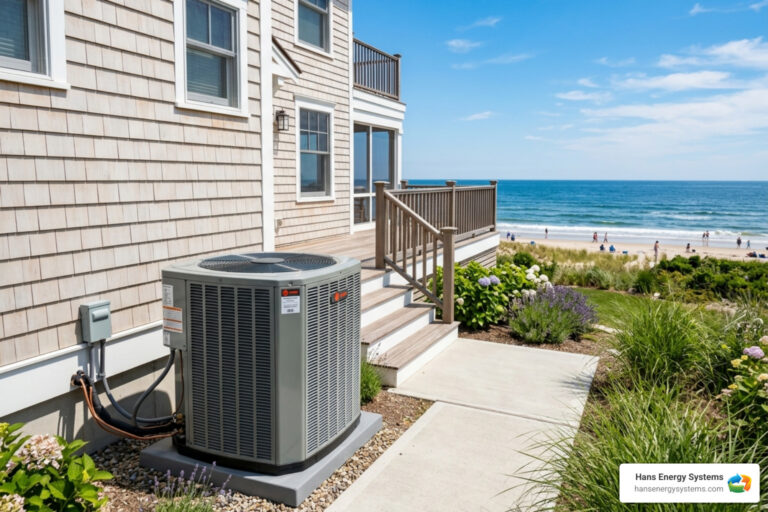
The “High-Exposure Zone” is generally considered to be anything within 1,500 feet of tidal water. In neighborhoods like Mission Beach or Del Mar, the salt spray is often visible, but the damage is happening even when the sun is shining. The marine layer—that thick coastal fog we often see in San Diego—is a major carrier of salt particles. As the fog rolls in, it deposits microscopic salt crystals deep into the condenser coils of your AC.
Placement also plays a massive role. A unit placed on the “windward” side of a home—the side facing the ocean breezes—is essentially being “sandblasted” by salt and moisture 24/7. Conversely, units placed on the “leeward” side, using the home’s structure as a buffer, often last several years longer. Understanding these local nuances is part of why we specialize in Common AC Problems in Poway and Solutions, as microclimates can vary even within a few miles.
Environmental Factors Shortening System Life
The primary mechanical killer in coastal zones is galvanic corrosion. Most AC units use a combination of copper tubing and aluminum fins. When salt and moisture are added to this mix, the salt acts as an electrolyte. This effectively turns your AC unit into a giant, self-destructing battery. The aluminum fins begin to “sacrifice” themselves, crumbling into a white powder and falling away from the copper tubes.
Beyond corrosion, there is the issue of workload. Coastal systems in San Diego often run for 2,500 to 3,500 hours per year, nearly double the runtime of units in cooler or drier climates. This constant demand for dehumidification puts immense strain on the condensate system. If the humidity is high, your AC might pull over a gallon of water per hour out of the air. If the drain lines aren’t clear, this can lead to issues like Why Your AC Unit Leaking Water in Poway.
Warning Signs of Coastal Corrosion and Wear
How do you know if the salt air is winning the battle against your HVAC system? Coastal wear is progressive, but there are several visible and audible indicators that your unit is struggling.
- “White Rust” or Powder: If you notice a white, crusty substance on your outdoor coils, this is aluminum oxide. It means your fins are literally dissolving.
- Pitting and Flaking: If the metal fins on your outdoor unit feel like “wet crackers” or crumble when touched, the heat transfer capability of the unit is gone.
- Rising Energy Bills: As coils corrode, they lose their ability to release heat. Your system has to run longer and work harder to achieve the same cooling effect, which shows up on your utility bill.
- Reduced Airflow: Salt and sand can physically clog the delicate fins, choking the system and causing the compressor to overheat.
If you notice these symptoms, it’s important to review the Warning Signs AC Needs Replacement in Poway. Catching these issues early can sometimes save the system, but often they are Signs Home is Ready for New AC Installation.
Maintenance Strategies for Salty Climates
While the coastal environment is harsh, it isn’t hopeless. You can significantly extend how long do air conditioners last in coastal environments by adopting a “survival tactic” maintenance routine.
- Freshwater Rinsing: This is the single most effective DIY step you can take. Gently rinsing your outdoor condenser unit with a garden hose (never a pressure washer!) once or twice a month helps wash away salt deposits before they can pit the metal.
- Coil Protective Coatings: For homes near the water, we often recommend aftermarket coatings like phenolic epoxy. these create a chemical barrier between the salt air and the metal.
- Clear Vegetation: Maintain at least a two-foot clearance around your unit. Coastal plants grow fast and can trap salt-laden moisture against the cabinet.
- Filter Discipline: High humidity means more dust and salt particles getting trapped in your indoor filters. Change them every 30 to 60 days to ensure the system isn’t straining to breathe. Dirty Air Filters Can Harm AC Efficiency and lead to premature motor failure.
If your system has already suffered from neglect, you may need a professional AC Repair Poway CA to restore its performance.
Maintenance Frequency for Maximizing How Long Do Air Conditioners Last in Coastal Environments
Inland homes can often get away with an annual tune-up. Coastal homes do not have that luxury. We strongly recommend bi-annual (twice-yearly) professional maintenance—once in the spring before the summer heat hits, and once in the fall.
During these visits, a technician should perform a deep salt rinse, check electrical terminals for “green” corrosion (oxidation), and inspect the capacitor. Salt air can penetrate electrical cabinets, leading to sudden failures even if the mechanical parts look fine. Regular AC Repair and maintenance are the only ways to push a coastal unit toward that 15-to-20-year goal.
Choosing Coastal-Rated Equipment in San Diego
If you are currently looking for a new system in 2026, you’ll find that technology has come a long way. Newer SEER2-compliant units are designed with higher efficiency standards that are particularly beneficial for the long runtimes we see in San Diego.
When shopping for a unit in a coastal zip code, look for these “marine-grade” features:
- Phenolic or Epoxy-Coated Coils: These are factory-applied coatings that protect the aluminum fins from salt spray.
- Stainless Steel Hardware: Standard screws and fasteners will rust shut within years; stainless steel stays removable for future repairs.
- Double Powder-Coated Cabinets: Extra layers of paint help prevent the “sunken shipwreck” look that many beachside AC units develop.
Whether you need AC Installation Poway CA or a more specialized AC Installation in a beachfront neighborhood, choosing the right equipment from day one is the best way to ensure longevity.
When to Replace Your Coastal AC Unit
There comes a point where repairing a salt-damaged unit is no longer cost-effective. We generally recommend the “50% Rule”: if the cost of a repair (such as a full coil replacement) exceeds half the value of a new system, it’s time to upgrade.
Other triggers for replacement include:
- R-22 Refrigerant: If your system was installed before 2010 and uses Freon (R-22), repairs are now incredibly expensive and environmentally unfriendly.
- Frequent Short Cycling: If your unit turns on and off rapidly, it may be a sign of a dying compressor or severe airflow restriction. When AC Starts Short Cycling in Poway, it’s a major red flag.
- Age vs. Condition: In coastal San Diego, a 12-year-old unit is often functionally “older” than a 20-year-old unit in the desert.
Knowing When to Replace Your AC System in Poway can save you from a catastrophic failure during a July heatwave.
Frequently Asked Questions about Coastal AC Lifespan
Can I use a cover to protect my AC from salt air?
We generally advise against standard plastic or vinyl covers. These can create a “greenhouse effect,” trapping moisture and salt inside the unit and actually accelerating rust and mold growth. If you must cover the unit during a major storm, use a breathable mesh material and remove it immediately after the weather clears. Never run the AC while it is covered, as this will cause the motor to burn out almost instantly.
Does salt air affect units located several miles inland?
Yes. Microscopic salt particles can travel 3 to 5 miles inland on onshore breezes. While the impact is less severe than on a beachfront property, homes in neighborhoods like Clairemont or Bay Park still experience faster corrosion than homes in East County. San Diego’s “June Gloom” marine layer is a primary vehicle for moving salt air inland.
Is it better to repair or replace a corroded unit?
If the corrosion has reached the point of “coil perforation”—where the refrigerant is leaking through tiny holes eaten into the metal—replacement is almost always the better choice. Patching a corroded coil is a temporary fix, and the system’s efficiency will remain low, costing you more in monthly bills than a new AC Replacement would.
Conclusion
Living near the coast is a dream for many San Diegans, but it requires a proactive approach to home maintenance. Understanding how long do air conditioners last in coastal environments allows you to plan ahead and protect your investment. By choosing coastal-rated equipment, rinsing your unit regularly, and sticking to a bi-annual maintenance schedule, you can beat the “triple threat” of salt, heat, and moisture.
At Hans Energy Systems, we understand the unique challenges of San Diego’s microclimates. Whether you are in the high-exposure zones of La Jolla or the slightly drier hills of Poway, our team is dedicated to providing reliable, efficient cooling solutions that stand the test of time. Don’t let the salt air take your comfort by surprise.
Schedule your professional AC replacement today and ensure your home stays cool for many coastal summers to come.