

The Desperate Heatwave Hack: Should You Spray Your AC?
Is your air conditioner running nonstop, but the house still feels uncomfortably warm? When temperatures soar, many homeowners ask: can I hose down my condenser unit to make it run cooler? It is a common question, especially during an intense August heatwave when your system is pushed to its absolute limits just as the back-to-school transition begins. Here in Poway, our technicians at Hans Energy Systems field this question almost daily.
If your system is struggling, the safest first step is always professional preventative AC maintenance.
When the outdoor temperature in Poway CA spikes, your outdoor condenser unit works overtime. You can hear it buzzing, you can feel the intense heat radiating from the top fan, and you know the system is fighting a losing battle against the sun. In that moment of frustration, grabbing the garden hose seems like a highly logical solution. After all, if spraying cold water on your face cools you down on a hot afternoon, shouldn’t it do the same for your struggling air conditioner?
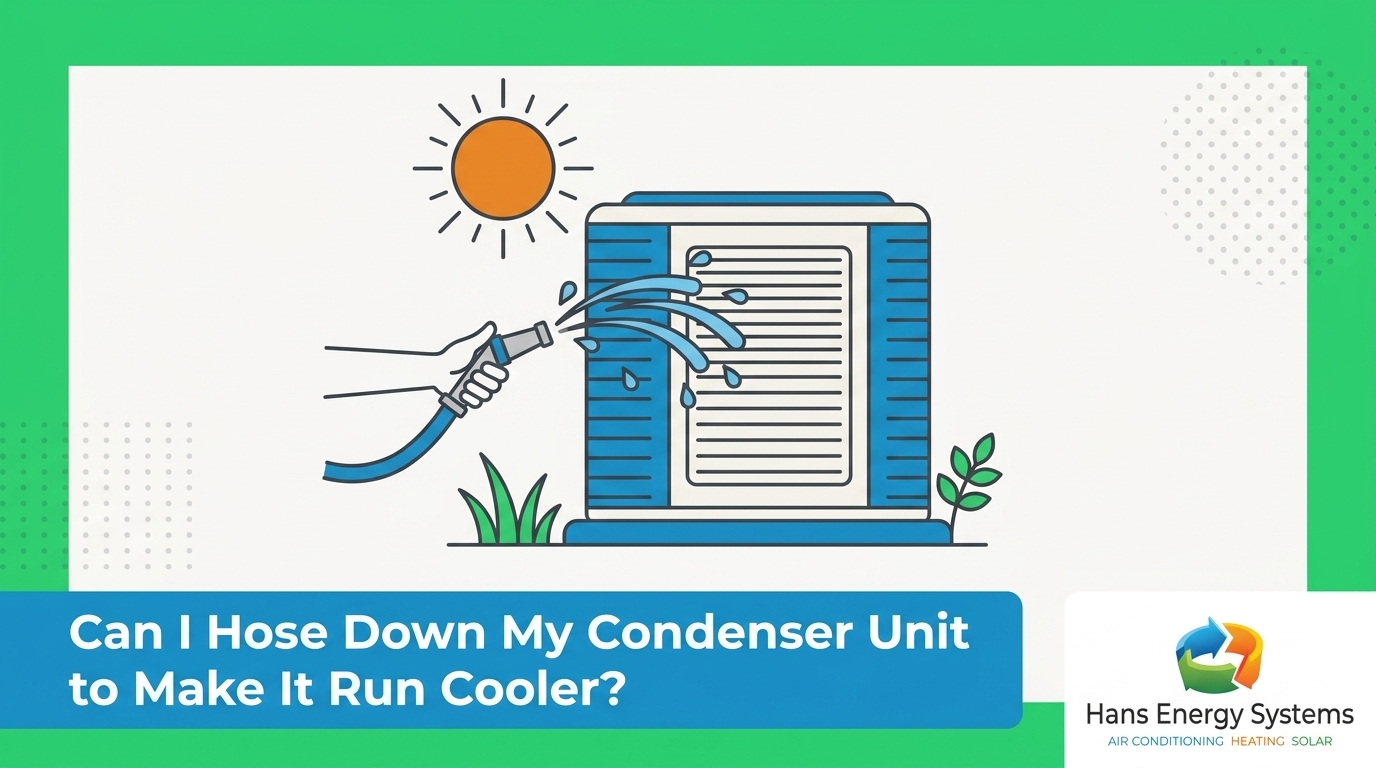
This temptation leads many well-meaning homeowners to take matters into their own hands. They drag the hose over to the side of the house, aim the nozzle at the metal grating, and blast the running unit with cold tap water, hoping for instant relief indoors.
Here is the thing: what looks like a harmless DIY cooling hack is actually a massive mechanical risk. The decision to spray a running air conditioner forces you to cross the line between basic home care and accidental property damage. Before you turn on the spigot, you need to understand exactly what that cold water does to the delicate, super-heated metal components spinning inside your unit.
The Direct Answer: Can I Hose Down My Condenser Unit to Make It Run Cooler?
No, you should never hose down a running condenser unit to make it run cooler. Spraying cold water on hot, thin metal fins causes immediate thermal shock. This violent reaction leads to warped fins, severely restricted airflow, and highly expensive system failures that could have been easily avoided.
The short answer is that water and operating HVAC equipment do not mix in the way most people think. There is a massive difference between safely cleaning an air conditioner that is completely powered off and spraying a hot, running unit in the middle of the afternoon. If you are experiencing weak airflow or warm air from your vents, you need professional AC repair in Poway, not a garden hose.
At Hans Energy Systems, we’ve spent years seeing the aftermath of DIY cooling attempts across Poway homes. We focus on educating homeowners about the “why” behind these warnings. We want you to understand the mechanics of your system so you can make informed decisions, rather than just telling you what not to do. When you understand how the unit operates, the danger of this popular heatwave hack becomes obvious.
| Action | System Status | Impact on the AC Unit |
|---|---|---|
| Routine Maintenance Washing | Powered OFF and Cooled Down | Safely removes dirt and debris, improving overall airflow. |
| Desperate Heatwave Hosing | Powered ON and Running Hot | Causes thermal shock, warps delicate metal, and risks electrical shorts. |
While the water might temporarily lower the pressure inside the system for a few fleeting minutes, the permanent physical damage it leaves behind will cost you far more than whatever minor comfort you gained.
The Physics of Thermal Shock on Aluminum Fins
Understanding Your Condenser Coils
To understand why this hack is so destructive, you have to look at the materials inside your outdoor unit. The sides of your air conditioner are lined with thousands of paper-thin metal fins. These fins are typically made of aluminum because aluminum is incredibly efficient at transferring heat. Their entire job is to pull the heat captured from inside your house and release it into the outdoor air.
The Science of Thermal Shock
During an end-of-season August heatwave, these aluminum fins get incredibly hot. Basic thermodynamics tells us that metal expands when it absorbs high heat. As your air conditioner runs for hours on end, those thin aluminum fins expand and stretch to accommodate the extreme operating temperatures.
This is where the danger of why skipping AC maintenance is a recipe for a meltdown becomes real. When you suddenly hit that expanded, super-heated aluminum with a blast of cold hose water, the metal experiences something called thermal shock. The rapid drop in temperature forces the aluminum to contract violently and instantly.
Because the fins are so thin and delicate, this violent contraction causes severe metal fatigue. The fins instantly warp, bend, and crush together. Instead of standing in straight, even rows that allow air to pass through freely, they become a mangled, flattened wall of metal. The very component designed to help the unit breathe is now suffocating it.

The Hidden Threat of Hard Water Scale on Hot Coils
Even if the temperature difference wasn’t enough to instantly crush the aluminum fins, there is a secondary danger to using a garden hose on your air conditioner: the water itself. Municipal tap water is rarely pure. It is full of dissolved minerals, and Poway CA is well known for having hard water that contains high levels of calcium and magnesium. In our experience servicing local HVAC units, we regularly encounter condenser coils completely choked by chalky white buildup from this exact hose-down method.
When you spray mineral-heavy tap water directly onto a hot, running condenser unit, the water evaporates almost instantly. However, the minerals do not evaporate. They are left behind, baking directly onto the hot aluminum coils.
Over time, these baked-on minerals build up into a tough, chalky layer of hard water scale. This scale is highly problematic for an HVAC system.
- It acts as a powerful insulator: The scale traps heat inside the coils instead of allowing the aluminum to release it into the air.
- It permanently reduces efficiency: With an insulating barrier blocking heat transfer, the unit has to run longer to achieve the same cooling results indoors.
- It accelerates corrosion: Mineral deposits hold moisture against the metal when the unit is off, leading to rust and coil degradation.
By trying to force the unit to run cooler with tap water, you are actually permanently reducing its cooling capacity by building an insulating wall of rock directly onto the heat exchanger.
The Catastrophic Cost of Warped Condenser Fins
When the delicate fins warp from thermal shock and mineral scale blocks the heat transfer, the physical airflow required to cool the refrigerant is cut off. This sets off a destructive chain reaction inside the equipment.
Because the hot refrigerant cannot be cooled properly by the outdoor fan, it returns to the compressor at a much higher temperature than intended. This forces the compressor—the literal heart of your air conditioning system—to work exponentially harder to push the refrigerant through the lines. The compressor begins to overheat, drawing more electricity and straining its internal electrical windings.
One local customer learned how quickly a strained system can fail during a late-summer heat wave. As temperatures hit the high 90s to 100 degrees, their AC compressor leaked refrigerant and began overheating, eventually causing a short circuit and leaving them with no power to the unit. Our team at Hans Energy Systems diagnosed the issue, explained the need for a full system replacement, and successfully installed a new, high-efficiency HVAC system. While their story started with a mechanical failure rather than a hose hack, the end result of an overheating compressor is exactly the same: a total system breakdown.
The financial reality: Replacing a burnt-out compressor or a severely warped outdoor coil is a massive expense. It often makes more financial sense to replace the entire outdoor unit. You can avoid this risk entirely when you schedule an AC tune-up and let a professional restore the unit’s efficiency safely.
Washing vs. Cooling: Is Water Ever Safe for Your AC?
After learning about thermal shock and hard water scale, you might be wondering if water should ever touch your outdoor unit. The answer is yes—condenser units absolutely need to be washed periodically to remove dirt, pollen, grass clippings, and debris that accumulate over the seasons.
However, there is a strict difference between safe maintenance washing and desperate cooling hacks. If you are going to clean the unit, you must follow the correct procedure to protect the equipment.
- Power the system down completely: The unit must be turned off at the indoor thermostat AND at the outdoor electrical disconnect box.
- Let the metal cool: Wait for the unit to reach the ambient outdoor temperature before applying any water to avoid thermal shock.
- Use a gentle spray: Never use a pressure washer or a high-pressure hose nozzle. Even without thermal shock, high water pressure will easily bend the soft aluminum fins.
During a professional AC system diagnostic check, technicians do not just use hard tap water. They use specialized, non-corrosive coil cleaners designed to safely dissolve dirt and grime without damaging the metal or leaving mineral deposits behind.
Frequently Asked Questions About AC Cooling Hacks
Can you spray water on your AC unit while it’s running?
No, you should never spray water on a running AC unit. Spraying a running unit risks severe thermal shock to the hot fins, which causes them to warp and block airflow. It also introduces a severe electrical hazard if water accidentally enters the fan motor housing or the high-voltage electrical panel.
Does pouring water on the AC condenser help it cool?
It may cause a momentary drop in pressure, but it damages the metal and leaves insulating mineral deposits behind. The long-term mechanical damage far outweighs the temporary few minutes of cooling you might feel indoors. Your unit will actually run hotter in the future because of the damage.
Is it safe to mist your air conditioner?
While some commercial systems use specialized misting technology with treated water, DIY misting with hard tap water ruins residential units. Misting accelerates hard water scale buildup, eventually suffocating the unit as the minerals bake onto the hot coils. This permanently reduces the system’s efficiency.
What is the fastest way to cool down an overheating AC unit?
Turn it off immediately at the thermostat to prevent permanent compressor damage. Next, check and replace a dirty indoor air filter, which is the most common cause of restricted airflow and overheating. Finally, call a professional to check the refrigerant levels and clean the coils safely.
How can I tell if my condenser fins are already damaged?
Look for sections of the delicate metal grating that appear flattened, smashed, or bent closed. If large sections of the unit look like they have been smoothed over or crushed, the unit requires professional fin combing or a complete coil replacement to restore proper airflow.
Save Your System with Professional Diagnostics and Care
A scientifically grounded understanding of thermal shock is the best way to prevent accidental system destruction. When you know that cold water causes hot aluminum to warp, bend, and suffocate your compressor, you can safely put the garden hose away.
If your air conditioner is struggling to keep up with the Poway CA heat, it needs a professional diagnostic, not a desperate DIY cooling hack. A trained technician can evaluate the refrigerant levels, safely clean the coils with specialized solutions, and ensure the electrical components are operating securely. Schedule an inspection today to safely restore your system’s cooling capacity and keep your home comfortable without risking a total breakdown.