
Why Is My AC Unit Freezing Up in Summer? (Quick Answer)
Why is my ac unit freezing up in summer is one of the most common questions San Diego homeowners ask during a heatwave — and the answer is simpler than you’d expect.
Your AC freezes when something disrupts the normal flow of heat through the system. The most common culprits are:
- Dirty or clogged air filter — blocks warm air from reaching the evaporator coil
- Low refrigerant levels — causes pressure to drop, making the coil too cold
- Blocked or closed vents — restricts airflow across the system
- Dirty evaporator coils — act as insulation, preventing proper heat exchange
- Faulty blower motor — stops warm air from circulating over the coil
- Low outdoor temperatures — running AC when it’s below 60°F can trigger a freeze
- Clogged condensate drain line — excess water can freeze onto the coil
Any one of these problems can cause moisture in the air to freeze solid on your evaporator coil — right in the middle of a hot summer day.
Here’s the frustrating part: a frozen AC can’t cool your home. The ice blocks heat exchange entirely, so the harder your system runs, the worse it gets. Left unchecked, a frozen coil can damage your compressor — one of the most expensive components in the entire system.
The good news? Most freezing issues start with something you can check yourself in minutes. This guide walks you through exactly what to do, step by step.

Why is my AC unit freezing up in summer?
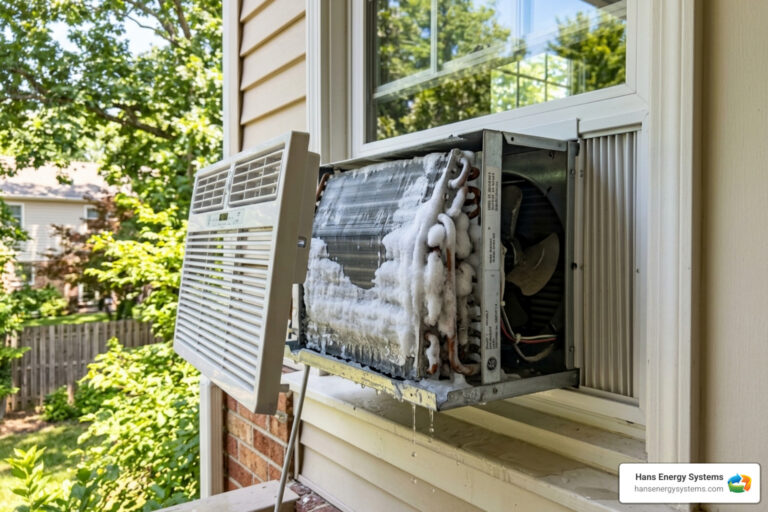
It seems like a physical impossibility. It is May 2026, the sun is beating down on Poway, and your outdoor thermometer is pushing triple digits. Yet, there it is: a thick, white block of ice encasing your air conditioner’s copper lines.
To understand why is my ac unit freezing up in summer, we have to look at the “magic” of the refrigeration cycle. Your AC doesn’t actually “create” cold; it removes heat. Inside your home, the evaporator coil is filled with very cold refrigerant. As warm indoor air is blown over these coils, the refrigerant absorbs the heat, turning from a liquid into a gas.
When this process is interrupted, the moisture that naturally condenses on those coils (just like on a cold soda can) doesn’t just drip away into the drain pan—it freezes. This happens because the coil temperature has dropped below 32°F. This “heat absorption failure” is the root of almost every frozen unit we see in the San Diego area. Once a thin layer of ice forms, it acts as an insulator, making it even harder for the coil to absorb heat, leading to a runaway effect where your unit eventually looks like it belongs in Antarctica.
Dirty filters and why is my ac unit freezing up in summer
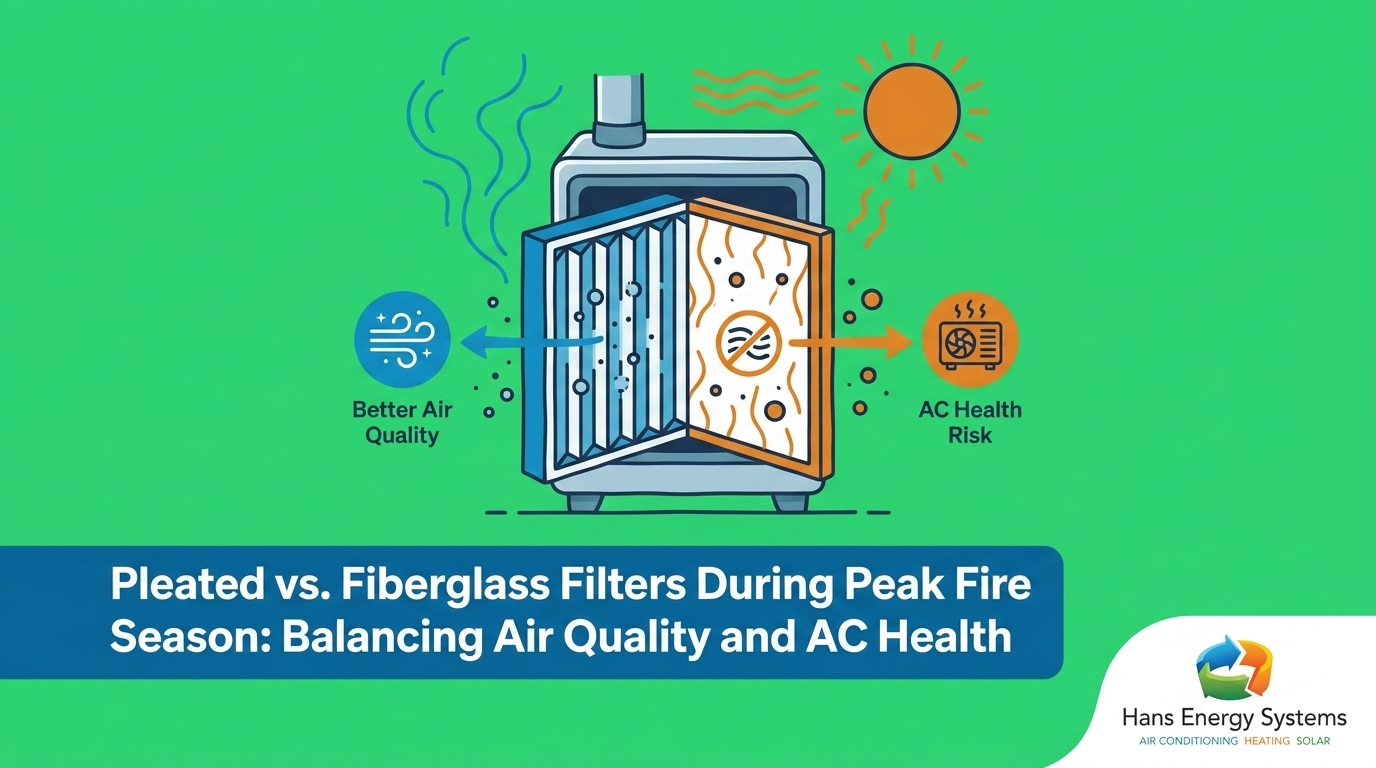
If there is a “Public Enemy Number One” in HVAC, it’s the dirty air filter. In fact, clogged filters are the single most common reason for a system to freeze up, and they are 100% preventable.
When a filter is caked in dust, pet hair, and debris, it acts like a wall. The blower motor tries to pull air through, but the restriction is too great. Without enough warm air passing over the evaporator coil, the refrigerant inside stays too cold. This lack of airflow is exactly Why Your Ductless Ac Freezes Up In Summer and why traditional central systems fail, too.
We recommend checking your filters every 30 days during the heavy cooling season in San Diego. If you have pets or live in a dustier part of the county, you might need to swap them out even more frequently. Dirty Air Filters Can Harm Ac Efficiency long before they actually freeze the unit, leading to higher energy bills while you wait for the inevitable ice block to form.
Low refrigerant levels: why is my ac unit freezing up in summer
There is a common misconception that an AC “uses up” refrigerant like a car uses gas. In reality, your AC is a closed-loop system. If the refrigerant is low, you have a leak.
When the refrigerant level (or “charge”) drops, it causes a drop in pressure within the evaporator coil. According to the laws of physics, a drop in pressure leads to a drop in temperature. This paradoxically makes the remaining refrigerant much colder than it’s supposed to be, quickly diving below freezing.
How can you tell if this is the problem? Look for these signs:
- Hissing or bubbling sounds near the indoor or outdoor unit.
- An oily residue around the refrigerant line connections (refrigerant often travels with a bit of oil).
- Warm air blowing from the vents even though the unit is running constantly.
If you suspect a leak, you’ll likely need an Ac Freon Recharge and a professional repair to find and seal the hole.
I found ice on my air conditioner—what should I do first?
The moment you spot frost on the lines or ice on the coil, you must act fast to protect your equipment. Running a frozen AC is like running a marathon with your shoelaces tied together; you’re going to cause some serious damage.
- Shut it down immediately: Turn the thermostat to the “OFF” position. This stops the cooling cycle and prevents the compressor from trying to pump refrigerant through a frozen block.
- Switch the fan to “ON”: Move the fan setting from “AUTO” to “ON.” This keeps the blower motor running without the cooling engaged, forcing warm indoor air over the frozen coils to help them melt.
- Check the filter: While the system is off, pull the air filter. If you can’t see light through it, it needs to go.
- Clear the vents: Walk through your home and make sure at least 80% of your supply vents are wide open. Also, ensure no rugs, curtains, or furniture (like that new couch in the living room) are blocking the return air grilles.
Taking these steps immediately can prevent “liquid slugging,” a nasty situation where liquid refrigerant makes its way back to the compressor, potentially leading to a total system failure that requires an Ac Repair Poway Ca.
How can I safely thaw my system without causing damage?
Thawing a frozen AC is a test of patience. Depending on the thickness of the ice, it can take anywhere from 1 to 24 hours to melt completely. You should never, under any circumstances, try to chip or scrape the ice off with a screwdriver or knife. The aluminum fins on your evaporator coil are incredibly delicate, and the copper lines are easy to puncture. A “quick fix” with a tool can turn a simple thaw into an expensive replacement.
As the ice melts, it has to go somewhere. Usually, this water flows into the condensate drain pan and out of your house. However, if the ice block is large enough, the sheer volume of water might overwhelm the pan or leak onto your floor. Keep an eye out for water pooling near the air handler, as this is a common sign Why Is My Ac Unit Leaking Water In Poway. It’s a good idea to have some towels or a wet/dry vac ready just in case.
Speeding up the defrosting process
If you’re stuck in a San Diego heatwave and need your air back now, you can carefully speed up the process. Using a hair dryer on a low or medium heat setting can help. Hold it at least six inches away from the coils and move it constantly to avoid overheating any single spot.
While you’re waiting, check the blower motor. If the fan isn’t spinning even when set to “ON,” the motor or a capacitor may have failed. This is a frequent cause of Mini Split Leaking Water and freezing in central units alike, as the lack of air movement allows the coil temperature to plummet.
Maintenance strategies to prevent future freezing in San Diego
In our experience serving areas from Oceanside down to Chula Vista, the best defense is a good offense. Most freezing issues are caught during a routine Ac Maintenance visit before they ever result in a breakdown.
| Maintenance Task | Frequency | DIY or Pro? | Why it Matters |
|---|---|---|---|
| Change Air Filter | Every 30-90 Days | DIY | Ensures maximum airflow to prevent ice. |
| Inspect Return Vents | Monthly | DIY | Prevents pressure imbalances in the system. |
| Clear Outdoor Debris | Monthly | DIY | Keeps the condenser coil breathing easy. |
| Clean Evaporator Coils | Annually | Professional | Removes insulating dust that causes freezing. |
| Check Refrigerant Levels | Annually | Professional | Catches leaks before they drop system pressure. |
| Flush Drain Line | Annually | DIY/Pro | Prevents water from backing up and freezing. |
Regularly addressing Common Ac Problems In Poway And Solutions through a proactive maintenance plan is the most cost-effective way to keep your home comfortable all summer long.
When is it time to call a professional for HVAC repairs?
While a dirty filter is an easy DIY fix, many causes of a frozen AC require specialized tools and EPA certification. You should call us for Ac Service if:
- The ice returns quickly: If you thaw the unit and it freezes up again within a few hours (especially with a clean filter), you likely have a refrigerant leak or a mechanical failure.
- You hear unusual noises: Hissing, bubbling, or loud buzzing from the outdoor unit are red flags.
- Electrical issues: If your circuit breaker keeps tripping when the AC tries to start, don’t keep flipping it back on. This indicates a serious electrical short.
- The blower isn’t working: If the fan won’t spin, the system cannot move the heat necessary to stay unfrozen.
For homeowners in the San Diego area, getting a professional Hvac/Poway Ca/Ac Repair early can save you from the much higher cost of replacing a burnt-out compressor later.
Frequently Asked Questions about Frozen AC Units
Is it safe to run my AC if I see ice on the coils?
Absolutely not. If you see ice, turn the system off immediately. Running a frozen AC can lead to “liquid slugging,” where liquid refrigerant enters the compressor. Compressors are designed to compress gas, not liquid. Trying to compress a liquid can shatter the internal components of the compressor, leading to a total system failure.
How long does it take for a frozen AC to thaw completely?
It depends on the “severity of the ice sculpture” you have going on. A light frost might melt in an hour or two if you run the fan. However, a solid block of ice can take a full 24 hours to thaw naturally. We recommend waiting the full day to ensure all the internal ice you can’t see is gone before restarting the cooling cycle.
Can I fix a frozen AC myself or do I need a pro?
You can—and should—handle the first few steps: turn it off, run the fan, and change the filter. If the problem was just a dirty filter or a blocked vent, your AC should work fine once it’s thawed. However, if the filter was clean and the vents were open, you almost certainly have a refrigerant leak or a mechanical issue that requires professional diagnostics.
Conclusion
Finding your AC unit frozen in the middle of a San Diego summer is a major headache, but it’s a problem that can usually be solved with a little patience and the right maintenance. By keeping your filters clean, your vents open, and your system professionally serviced, you can avoid the “ice age” in your utility closet.
At Hans Energy Systems, we pride ourselves on being the reliable cooling experts for Poway, San Diego, and the surrounding communities. Whether you’re in Carlsbad, El Cajon, or anywhere in between, we’re here to help you get your home back to a comfortable temperature quickly and safely.
Don’t let a frozen AC ruin your summer. Schedule your professional AC repair today and let our experienced team diagnose and fix the issue for good!