
When Your Solar App Shows a Sudden Output Drop During Fire Season
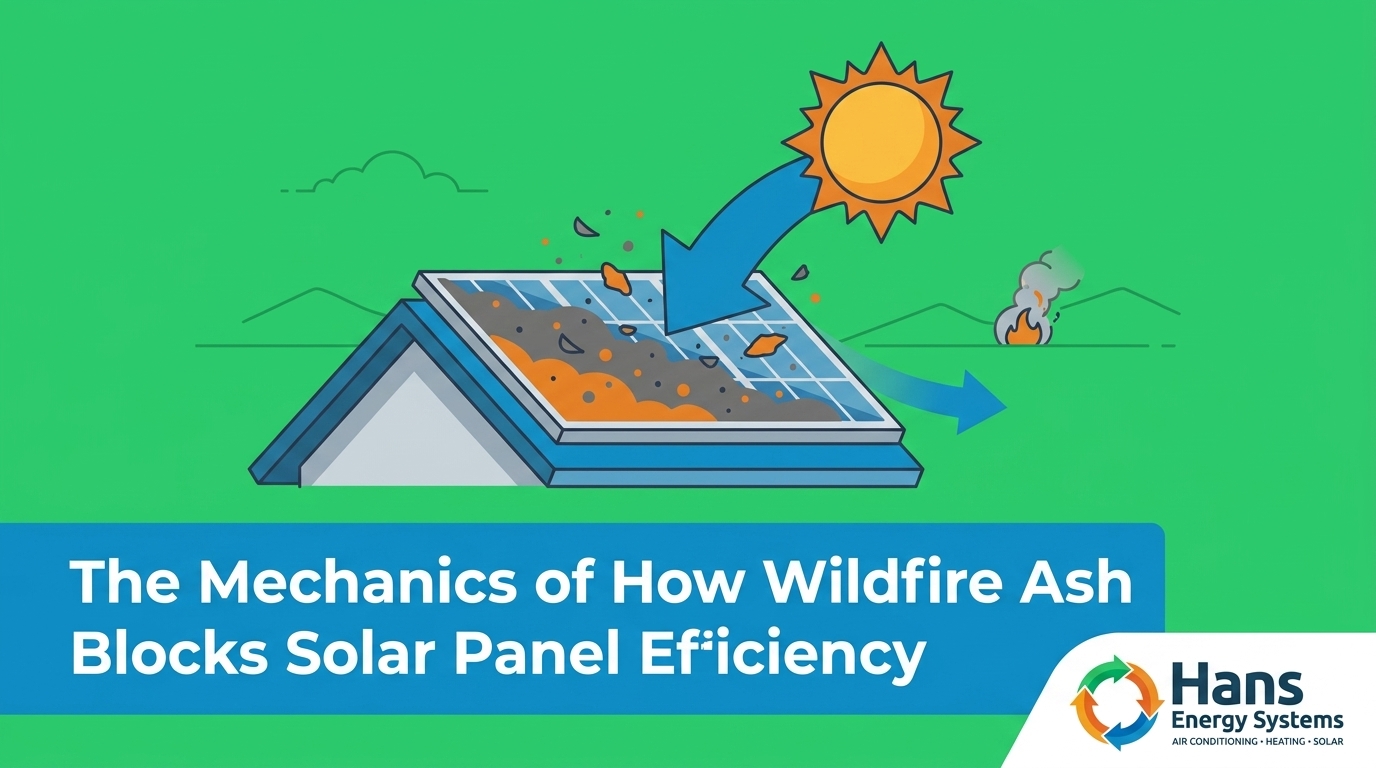
You check your monitoring app on a hazy afternoon, expecting peak production, but instead, you see a sharp, unexplained decline. The skies might be filled with smoke, but the mechanics of how wildfire ash blocks solar panel efficiency go far beyond a temporary shadow. At Hans Energy Systems, our team fields countless calls about this exact issue when the August late-summer wildfire season begins in Poway. Homeowners often notice a sudden drop in energy production on their monitoring dashboards, and that missing power does not automatically return when the skies finally clear.
If you are concerned about your system’s performance, understanding the basics of cleaning and maintaining solar panels is essential before you consider scheduling professional solar panel cleaning.
While reduced light transmittance from floating smoke is a temporary issue, the physical accumulation of ash creates a lasting, stubborn barrier. Treating this accumulation like ordinary dirt is a critical mistake that our technicians see all too often, and it can lead to permanent damage to your solar array. Ash is not just heavy dust; it is a complex chemical mixture. Understanding the specific mechanics of how this material bonds to your panels is the very first step to safely restoring their efficiency and protecting your long-term energy investment.
The Chemical Differences Between Normal Dust and Wildfire Ash
To understand why ash is so destructive to solar output, you have to look at the chemistry. Standard environmental dust consists mostly of loose silica, pollen, and dry soil that rests lightly on the panel surface. When the wind blows, much of this loose dirt simply scatters. While managing dust accumulation under solar panels during a dry spell is a routine part of ownership, ash requires a completely different approach.
Wildfire ash contains carbon, vaporized sap, and heavy oils released from burning vegetation. These oily particulates carry a different electrostatic charge than normal dust, causing them to cling aggressively to tempered solar glass. Furthermore, the abrasive nature of carbonized ash makes it far more hazardous to delicate panel coatings than everyday environmental debris.
| Characteristic | Normal Environmental Dust | Wildfire Ash |
|---|---|---|
| Composition | Silica, pollen, loose dry soil | Carbon, vaporized sap, heavy oils |
| Adhesion | Rests lightly, easily blown away | Electrostatic cling, chemically bonds |
| Abrasiveness | Low to moderate | Highly abrasive (carbonized particles) |
| Water Reaction | Washes away easily | Repels water, forms alkaline paste |
Vaporized Oils and Resins
Burning vegetation releases sticky resins into the smoke plume. As the ash settles onto your roof, these resins act as a heavy binding agent. This creates a chemical bond with the glass rather than a simple physical resting layer. When you look closely at ash-covered panels, you are not seeing a layer of dust—you are seeing a layer of baked-on organic glue.

How Chaparral Ash Bakes Onto Solar Glass
The type of vegetation burning directly impacts the severity of the ash. Fires burning through local chaparral, scrub oak, and brush in Poway CA and the surrounding Southern California terrain produce highly resinous, oily ash compared to standard timber or grass fires. In our years of experience working across this region, we know that this local vegetation has adapted to survive dry climates by retaining thick, oily saps. When it burns, those oils are vaporized and carried into the air.
When this sticky ash lands on panels operating under intense late-summer heat, a rapid baking process occurs. Southern California’s dry late-summer heat bakes the oily ash onto the glass before the dry Santa Ana winds even arrive. Solar panels naturally absorb heat to generate electricity, meaning the surface of the glass can easily exceed 140°F on a hot August afternoon.
This intense heat cures the vaporized oils, transforming the ash from loose, flaky particles into a hardened, adhesive film. Once this film sets, it severely blocks light transmittance. The photovoltaic cells beneath the glass are starved of sunlight, forcing the entire system to work harder to produce significantly less energy. This baked-on layer is exactly why a simple gust of wind does nothing to clear your panels after a nearby fire.
The Corrosive Threat of Morning Dew on Ash-Covered Panels
While the afternoons are famously hot and dry, late-summer mornings often bring coastal dew or heavy condensation to the region. This contrast between hot, dry afternoons and damp coastal morning dew characterizes our local microclimate, and it spells trouble for ash-covered solar arrays.
When morning moisture mixes with carbon-rich wildfire ash, a dangerous chemical reaction takes place. The water activates the alkaline properties of the ash, creating a highly corrosive, cement-like paste. If this paste is left to dry and re-bake onto the panel as the afternoon sun rises, it becomes exceptionally difficult to remove.
Prolonged exposure to this alkaline mixture is not just an efficiency problem; it is an equipment hazard. Premium solar panels feature specialized anti-reflective coatings designed to capture as much sunlight as possible. Our team frequently discovers that the high pH of the wet ash paste can slowly degrade these delicate anti-reflective coatings. Over time, this chemical etching permanently reduces the panel’s ability to absorb light, leading to a permanent drop in your system’s baseline efficiency long after the fire season ends.
Why Standard Hosing Fails (and Increases Micro-Scratching Risks)
When homeowners see a layer of ash on their panels, the instinct is often to grab the garden hose. However, we strongly advise against this, as DIY cleaning methods can cause catastrophic damage to tempered solar glass. Because ash is oil-based, water alone does not break the bond.
- Water spreads the oil: Applying tap water from a standard garden hose often spreads the oily ash around rather than lifting it off, creating a smeared, cloudy film that blocks even more light.
- Rain is ineffective: Relying on seasonal rain is equally useless, as the water simply beads up on the oily residue instead of washing it away.
- Thermal shock risks: Spraying cold hose water onto solar glass that has been baking in the afternoon sun can cause sudden thermal shock, potentially cracking the panels.
Any permanent damage to the glass permanently scatters sunlight, which is one of the most severe factors affecting solar panel output.
The Risks of Improper Agitation
If water doesn’t work, some might try to scrub the panels. Because ash is highly abrasive, wiping the glass with standard squeegees, sponges, or brushes causes thousands of tiny micro-abrasions. Dry wiping forces sharp carbon particles directly into the glass. Additionally, hard water from standard hoses leaves mineral deposits on top of the ash, compounding the blockage. We have seen firsthand how using improper techniques or household chemicals can easily void manufacturer warranties, leaving you unprotected if the panels fail.
Tracking the 15 to 40 Percent Efficiency Loss
According to the National Renewable Energy Laboratory (NREL), heavy ash accumulation can reduce solar efficiency by 15 to 40 percent, depending on the density of the particulate matter. Monitoring your solar app is crucial during and immediately after a nearby fire event to catch these drops early.
When you check your dashboard, look for sustained drops in output that persist even after the smoke clears and the skies turn blue. A normal production curve should look like a smooth bell shape on a sunny day. If your curve looks flattened, jagged, or peaks significantly lower than it did on a similar sunny day last month, you are likely dealing with baked-on ash.
Our expert guidance through the monitoring process helps differentiate between normal seasonal fluctuations and severe ash blockages. For example, our team at Hans Energy Systems recently walked a local Poway homeowner through their entire solar panel process. By being expertly guided through equipment purchase, installation, and monitoring, they learned exactly how to read their daily output graphs. This hands-on education ensured they felt informed and satisfied, knowing exactly when a drop in production was due to a passing cloud versus a physical blockage on the glass.
Specialized Mitigation: Restoring Output Safely
Removing baked-on, resinous ash requires a chemical-level understanding of the bond between the oils and the glass. It is not a matter of scrubbing harder; it is a matter of lifting the particulates safely. As a local family-owned energy efficiency expert, our team at Hans Energy Systems understands exactly how to protect your solar investments against these unique environmental challenges.
We use specialized deionized (DI) water systems. Deionized water has had all its mineral ions removed, which makes it act like a magnet for dirt and oils. When paired with specialized, non-abrasive lifting agents, this highly purified water breaks the chemical bond of the resinous ash safely. This process extracts the particulate matter without applying the heavy downward pressure that causes micro-scratching.
Proper solar energy maintenance restores the panels to peak efficiency without risking the integrity of the hardware. By using the right mitigation techniques, we ensure that your system returns to maximum output while protecting the long-term lifespan of your entire array.
Frequently Asked Questions
Why doesn’t rain wash ash off solar panels?
Rain cannot wash away wildfire ash because the ash contains vaporized sap and heavy oils that repel water. Instead of washing the surface clean, rainwater simply beads up on the oily film or mixes with the ash to create a stubborn, sticky residue.
How does wildfire smoke reduce solar output?
Wildfire smoke reduces solar output in two distinct ways. First, the thick smoke physically blocks sunlight from reaching the panels, causing an immediate drop in production. Second, as the smoke settles, it leaves behind an oily ash residue that permanently blocks light transmittance until it is professionally removed.
Is wildfire ash corrosive to solar panels?
Yes, wildfire ash can be highly corrosive when it interacts with moisture. When morning dew mixes with carbon-rich ash, it forms an alkaline paste that can slowly eat away at the delicate anti-reflective coatings on your solar glass.
Does wildfire smoke affect solar panels?
Wildfire smoke significantly affects solar panels by casting a wide shadow over your roof and depositing heavy particulate matter. Even after the air quality improves, the sticky ash left behind will continue to choke your system’s energy production.
How much efficiency is lost from dirty solar panels?
According to energy laboratories, heavy ash accumulation can cause a 15 to 40 percent loss in solar efficiency. The exact amount of lost power depends on the thickness of the ash layer and how long it has been allowed to bake onto the hot glass.
Can I use a garden hose to clean ash off my solar array?
You should never use a garden hose to clean ash off your solar array. Tap water contains hard minerals that leave spots, the cold water can cause thermal shock on hot glass, and the low pressure merely spreads the oily ash around without actually removing it.
When the late-summer skies clear but your energy production remains sluggish, ignoring the problem will only cost you more in lost power. The mechanics of how wildfire ash blocks solar panel efficiency prove that specialized, professional extraction is the only safe way forward. Reach out to our team at Hans Energy Systems to schedule a professional assessment to clear away the baked-on residue, protect your glass coatings, and restore your system to its maximum earning potential as we head into the back-to-school season.