
Why How Ductless Systems Save Energy with Zone Control Is the Smarter Choice for San Diego Homes
How ductless systems save energy with zone control comes down to two things: no duct losses, and only conditioning the rooms you actually use.
Here’s the short answer:
- Eliminate duct losses – Traditional ducted systems lose 20–30% of conditioned air through leaky ducts before it ever reaches a room. Ductless systems deliver air directly.
- Heat or cool only occupied rooms – Each indoor unit runs independently, so you stop paying to condition empty bedrooms, guest rooms, or unused spaces.
- Variable-speed inverter technology – Instead of blasting on and off at full power, ductless compressors ramp up and down to match the exact demand of each zone.
- Independent schedules per room – Each zone follows its own thermostat and timer, so your home office cools down when you start work and shuts off when you leave.
- No wasted runtime – Because the system only runs where and when it’s needed, total energy consumption drops significantly compared to a whole-home central air setup.
Homeowners who switch from inefficient ducted systems to properly sized multi-zone ductless setups typically see heating and cooling energy drop by 20–40%.
If your San Diego home has rooms that are always too hot, always too cold, or simply never used — you’re likely paying to condition air that nobody is breathing. That’s a problem ductless zoning solves directly.

Understanding the Mechanics: How Ductless Systems Save Energy with Zone Control
To understand how ductless systems save energy with zone control, we have to look under the hood. Unlike traditional central air conditioners that operate like a simple light switch—either 100% on or 100% off—a ductless system operates more like a dimmer switch. This is made possible by inverter technology.
The Power of Inverter Technology
In a standard HVAC system, the compressor kicks on with a massive surge of electricity, runs at full blast until the thermostat is satisfied, and then shuts down. This “all-or-nothing” approach is incredibly inefficient. Every time that motor starts up, it consumes a peak amount of energy.
Inverter-driven compressors, which are standard in the high-quality systems we install at Hans Energy Systems, can vary their speed continuously. When a single indoor unit in your guest room needs just a tiny bit of cooling, the outdoor compressor ramps up to a low, energy-sipping speed to meet that specific demand. This modulation prevents the energy-heavy “start-stop” cycles and keeps your indoor temperature rock-steady.
Precise Refrigerant Flow
In a multi-zone setup, a single outdoor condenser can support multiple indoor air handlers. These units are connected by small refrigerant lines. The system is smart enough to send exactly the right amount of refrigerant to each indoor head. This means if you are Maximizing Energy Savings with Ductless AC, the system isn’t wasting effort pushing cold air into a room that is already at the perfect temperature.
Efficiency Comparison: Central Air vs. Ductless Zoning
| Feature | Traditional Central Air | Ductless Multi-Zone |
|---|---|---|
| Delivery Method | Bulky metal or plastic ducts | Direct refrigerant lines |
| Energy Loss | 20–30% due to leaks/conduction | Near 0% (no ducts) |
| Compressor Type | Single or Two-Stage (On/Off) | Variable-Speed Inverter |
| Zoning Ability | Difficult (requires dampers) | Native (independent units) |
| Thermostat Control | One main sensor (usually) | One sensor per room |
Eliminating the “Duct Tax” and Distribution Losses
One of the most shocking statistics from the U.S. Department of Energy is that more than 30% of energy can be lost through air ducts. We like to call this the “Duct Tax.” It is a mandatory fee you pay to your utility company for air that never actually reaches your living space.
Why Ducts Fail
Traditional ductwork is often hidden in unconditioned spaces like attics or crawlspaces. In the heat of a San Diego summer, an attic can reach 140 degrees. Even if your ducts are perfectly sealed, the cold air inside them warms up through “conduction” before it hits your vents.
However, most ducts are not perfectly sealed. Over time, joints loosen, tape fails, and small holes develop. Up to 20-30% of the air moving through ducts can be lost due to these leaks. By choosing a ductless system, you are following our Ductless Mini-Split Installation Guide 2025 and bypassing the ductwork entirely.
Common Ductwork Issues That Waste Your Money:
- Disconnected Boots: Where the duct meets the vent in the floor or ceiling.
- Crushed Flexible Ducting: Restricts airflow and forces the motor to work harder.
- Poor Insulation: Allows thermal transfer in hot attics.
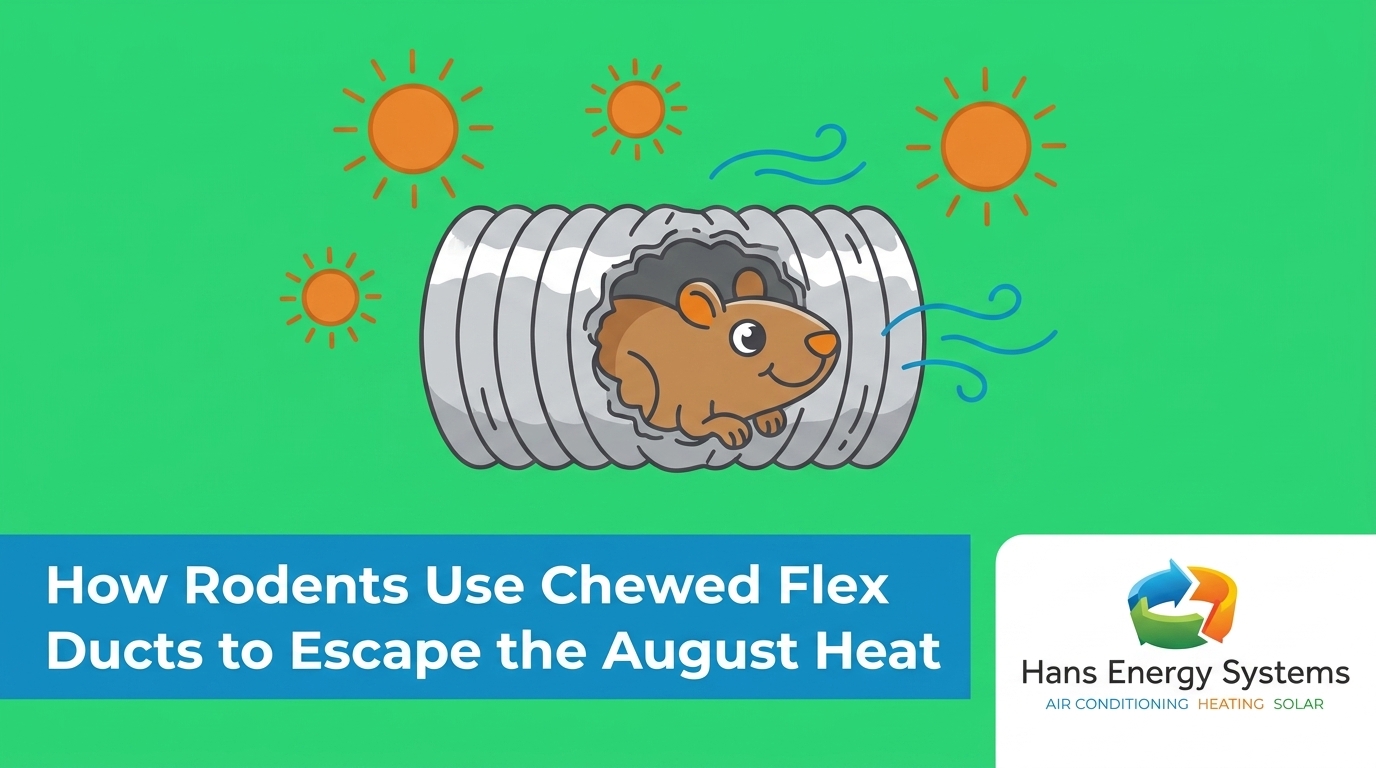
- Rodent Damage: Pests often chew through duct liners, creating massive leaks.
Ductless systems deliver conditioned air directly from the indoor unit to the room. There is no middleman, no leaky attic transit, and no wasted energy.
Strategic Applications for San Diego Homeowners
San Diego is home to a wide variety of architectural styles, from historic bungalows in North Park to sprawling modern estates in Rancho Santa Fe. How ductless systems save energy with zone control makes them uniquely suited for our local landscape.
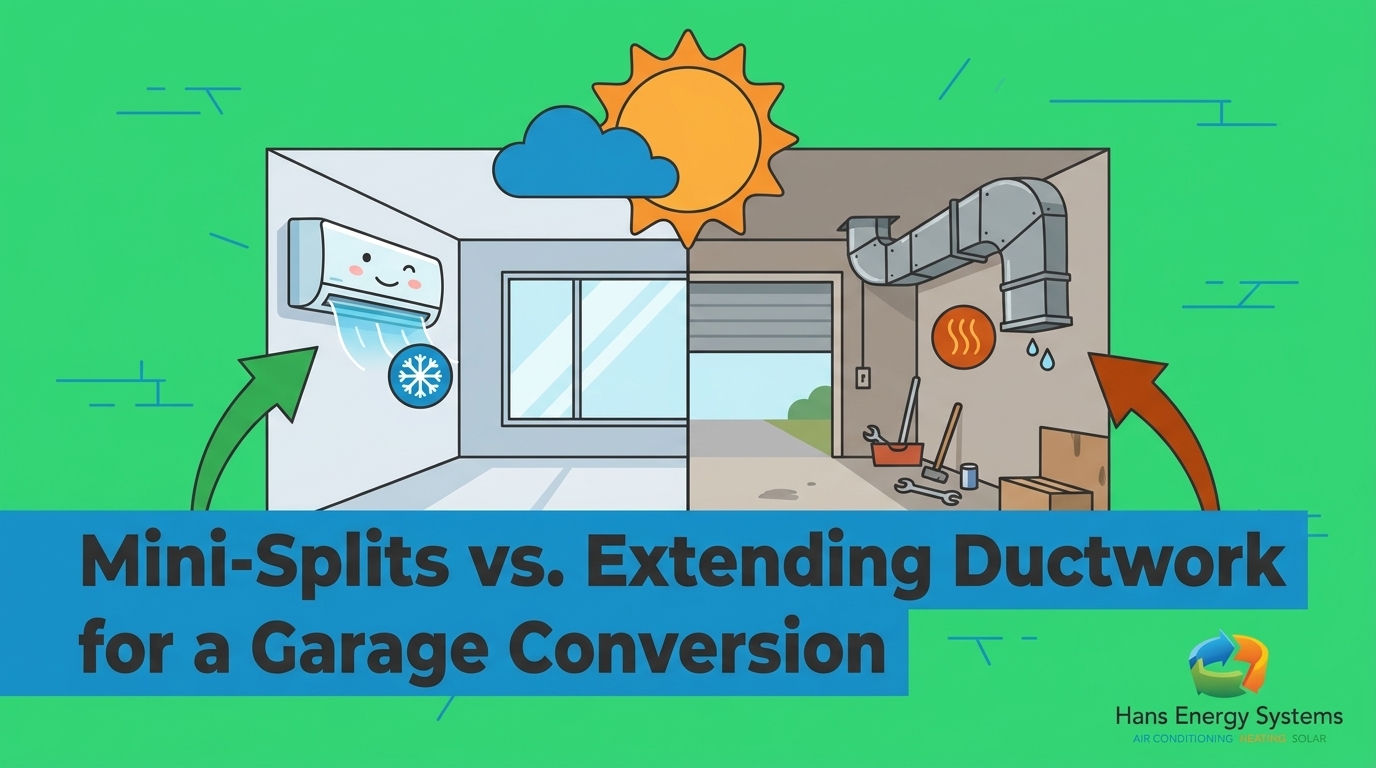
If you are considering a Mini Split Installation Poway, you might be looking to solve a specific comfort problem. For example, many homes in Poway and Scripps Ranch have “bonus rooms” or converted garages that stay five degrees warmer than the rest of the house. A Garage Mini-Split allows you to cool that specific workspace without turning the rest of your home into a refrigerator.
Historic Homes and Additions
For older homes in areas like La Jolla or Downtown San Diego, installing traditional ductwork is often a nightmare. It requires cutting into lath-and-plaster walls or dropping ceilings, which ruins the historic charm. Ductless systems only require a small three-inch hole for the refrigerant lines, making them the perfect retrofit. When we handle HVAC/Poway CA/Mini Splits, we focus on preserving the home’s aesthetics while maximizing its efficiency.
Maximizing Efficiency: How Ductless Systems Save Energy with Zone Control in Large Homes
In larger homes—think 3,000 square feet or more in Carmel Valley or Del Mar—the energy waste of a central system is magnified. If you live in a two-story home, you know that heat rises. Often, the upstairs bedrooms are sweltering while the downstairs living room is chilly.
With a multi-zone ductless system, you can address these Temperature Inconsistencies Ductless AC Zones by creating a custom “comfort map.”
- Daytime Mode: Condition the kitchen, living room, and home office. Keep the bedrooms in “energy-saver” mode.
- Nighttime Mode: Cool only the occupied bedrooms. There is no reason to pay for AC in the kitchen while you sleep.
- Guest Wing: If you have a guest suite that is only used a few times a year, you can leave that zone completely off, saving hundreds of dollars annually.
Advanced Features and Maintenance for Peak Performance
To ensure your system remains as efficient as the day it was installed, maintenance is key. We often tell our clients in Oceanside and Carlsbad that Dirty Air Filters Can Harm AC Efficiency more than almost any other factor. When a filter is clogged, the fan has to work twice as hard to pull air through, which spikes your electricity usage.
Understanding Efficiency Ratings
When shopping for a system, keep an eye on these two metrics:
- SEER2 (Seasonal Energy Efficiency Ratio): This measures cooling efficiency. Modern ductless systems can reach SEER2 ratings of 20 to 30+. For context, a standard central AC might only be a 14 or 16.
- HSPF2 (Heating Seasonal Performance Factor): This measures heating efficiency. Since ductless systems are heat pumps, they move heat rather than generating it, making them 30-50% more efficient than electric furnaces.
Proper care also prevents common issues. For instance, knowing Why Your Ductless AC Freezes Up in Summer—usually due to restricted airflow or low refrigerant—can save you from a costly mid-August breakdown. Similarly, if you notice Why Is My Ductless AC Making Strange Noises, it’s usually a sign that a component is vibrating or struggling, which reduces overall efficiency.
Smart Features: How Ductless Systems Save Energy with Zone Control and Sensors
The newest generation of ductless units comes with “eyes.” Some high-end models feature infrared motion sensors that scan the room for human activity.
If the sensor detects that you’ve left your home office for more than 20 minutes, it can automatically shift the unit into an energy-saving “eco-mode.” When you walk back in, it ramps back up to your preferred setting. This level of automation is excellent for Fixing Uneven Cooling Issues in Ductless AC because it ensures energy is only spent when someone is actually there to enjoy the comfort.
Frequently Asked Questions about How Ductless Systems Save Energy with Zone Control
How much can I expect to save on my monthly energy bills?
While every home is different, the combination of eliminating duct losses and utilizing zone control typically results in a 20–40% reduction in heating and cooling costs. In San Diego’s climate, where we use our AC for a large portion of the year, these savings can add up to over $1,000 annually for some larger households.
Can I heat one room while cooling another with a multi-zone system?
Generally, no. In a standard multi-zone setup, the outdoor compressor can only be in one “mode” at a time—either heating or cooling. If the system is set to cool, all active indoor units will provide cooling. However, because each unit has its own thermostat, you can have one room set to 68 degrees and another set to 75 degrees. If you require simultaneous heating and cooling in different rooms, specialized “heat recovery” systems are available, though they are more common in commercial settings.
What is the ideal number of zones for a standard 1,500 square foot home?
For a typical three-bedroom home in areas like Santee or El Cajon, we usually recommend 3 to 4 zones. This typically covers the main living area and the primary bedrooms. However, the best way to determine this is through a professional load calculation. When we perform HVAC/Poway CA/Ductless AC assessments, we look at window orientation, insulation levels, and how you actually use your home to ensure the system is perfectly sized.
Conclusion
Switching to a ductless system is about more than just staying cool; it’s about taking control of your home’s energy footprint. By eliminating the waste of leaky ducts and the inefficiency of whole-home cooling, you can enjoy a more comfortable home while keeping your utility bills in check.
At Hans Energy Systems, we pride ourselves on providing the most reliable and efficient HVAC solutions across San Diego County. Whether you are in Ramona, Chula Vista, or right here in Poway, our team is dedicated to exceptional customer service and quick, professional installs. If you’re tired of “thermostat wars” and high energy bills, it’s time to see why we are among the Find Me the Top Rated Companies for Ductless AC in Poway.
Ready to experience the difference of precision zoning? Start your energy-saving journey with a professional ductless consultation today and let us help you build a more comfortable, efficient future for your home.