
Why Does My AC Shut Off During Peak Heat Hours?
Why does my ac shut off during peak heat hours is one of the most common questions San Diego homeowners ask during summer — and the answer is almost never just “it’s too hot outside.” Your AC is shutting off because one or more underlying issues are being pushed past their limit by the afternoon heat.
Here are the most common reasons:
- Thermal overload — The system overheats and triggers a safety shutdown to protect the compressor
- Dirty air filter — Restricted airflow causes the evaporator coil to ice up or the motor to overheat
- Low refrigerant — Pressure drops trigger an automatic safety cutoff
- Thermostat misreads — A poorly placed thermostat reads false high temperatures and shuts the system off early
- Tripped circuit breaker — High electrical demand during peak hours causes the breaker to cut power
- Failing capacitor — A weak capacitor cannot sustain the motor under heavy load
- Oversized AC unit — The system cools too fast, short cycling before it can remove humidity or stabilize
Most of these problems exist quietly all season long. But between 12 PM and 6 PM, when outdoor temperatures peak and your system is working its hardest, they become impossible to ignore.
ACs are generally designed to keep your home about 20 degrees cooler than the outside air. On a 105°F San Diego afternoon with your thermostat set to 75°F, you’re asking your system to bridge a 30-degree gap — well beyond its design limit. Even a healthy system will struggle. A system with any of the issues above will shut down.

The Technical Reality of Afternoon Failures

When your air conditioner stops mid-cycle on a scorching May 2026 afternoon, it is usually performing a “safety shutdown.” Modern HVAC systems are equipped with sensors designed to prevent catastrophic failure. For instance, if the compressor reaches a certain temperature, a thermal overload switch will trip, cutting power before the motor literally melts.
Another common culprit is the high-pressure limit switch. During peak heat, the refrigerant in your outdoor unit must release heat into air that is already 100°F or hotter. If the outdoor coils are dirty or the fan is weak, the pressure inside the lines skyrockets. To prevent the lines from bursting, the system shuts itself off. This is why a regular Ac System Check is so vital before the summer surge hits. Without it, these safety mechanisms may be the only thing standing between you and a total system replacement.
Common Mechanical and Electrical Causes for Afternoon Failures
In the San Diego area, from Poway to Chula Vista, we see a specific pattern of mechanical failures during heatwaves. When the sun is at its highest, these three issues are the primary reasons why does my ac shut off during peak heat hours:
- Dirty Condenser Coils: Your outdoor unit is responsible for “dumping” the heat from your home into the outside air. If those metal fins are covered in dust, pet hair, or grass clippings, the heat stays trapped. This causes the compressor to work double-time, leading to overheating and a forced shutdown.
- Refrigerant Leaks: Refrigerant doesn’t “run out” like gasoline; it circulates in a closed loop. If levels are low, there is a leak. Low refrigerant causes a drop in pressure, which can trigger a safety sensor to kill the power. If you suspect a leak, you likely need an Ac Freon Recharge and a professional repair of the leak site.
- Capacitor Failure: The capacitor is like a giant battery that gives your AC motors the “kick” they need to start and stay running. Heat is the natural enemy of electrical components. In the peak afternoon sun, a weak capacitor can fail, causing the compressor or fan motor to hum and then shut down.
If your system is making clicking or buzzing sounds before it dies, you likely need Ac Repair in Poway, CA to address these electrical components before they cause a fire hazard or trip your circuit breaker.
How Restricted Airflow Causes Shutdowns During Peak Heat Hours
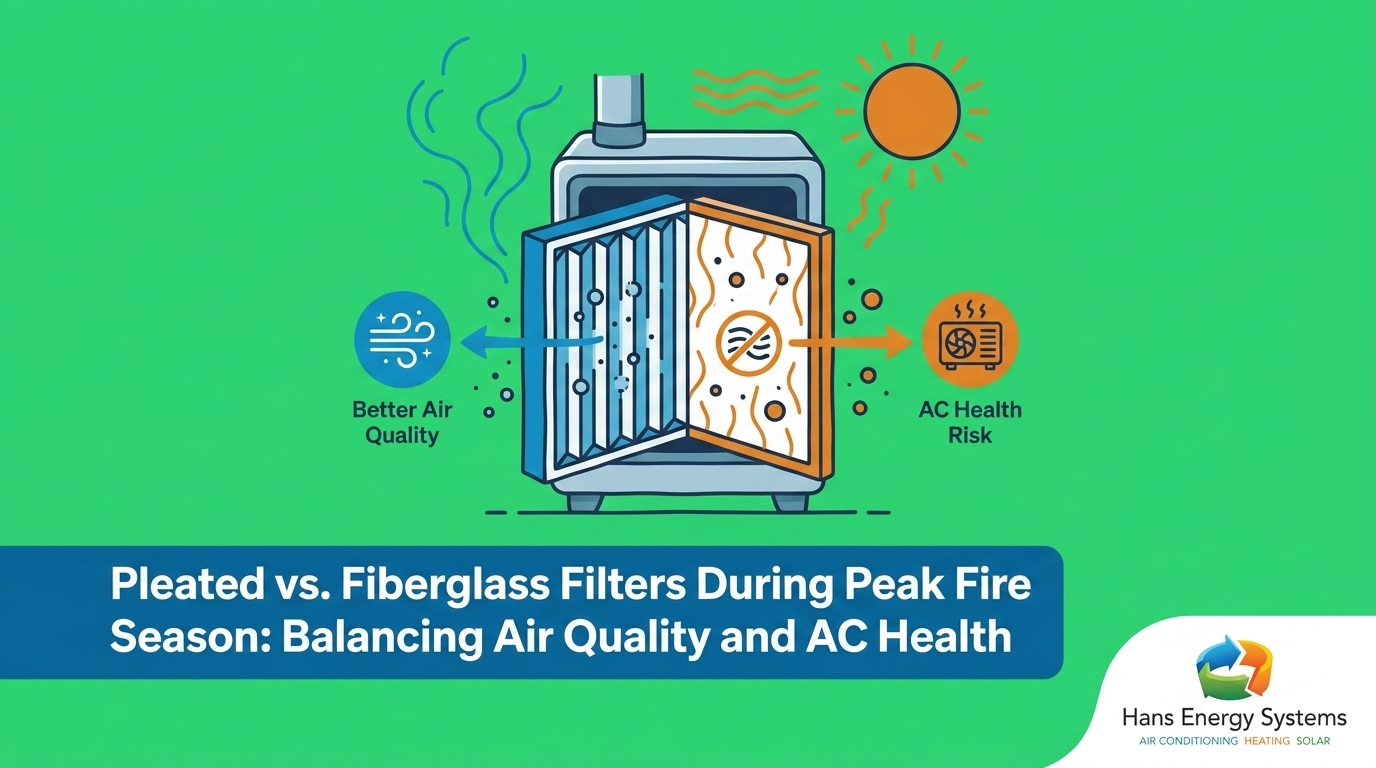
Airflow is the lifeblood of your cooling system. A dirty air filter can harm AC efficiency more than almost any other factor. When the filter is clogged, the blower motor has to work significantly harder to pull air through the system. This extra work generates heat, which can cause the motor to shut off.
Furthermore, restricted airflow prevents the evaporator coil (the indoor part) from absorbing enough heat. When this happens, the coil gets too cold and the condensation on it turns to ice. Once a block of ice forms, airflow stops entirely, and the system will shut down to prevent damage. This is a primary reason when AC starts short cycling in Poway, as the system tries to restart, realizes it’s frozen, and shuts off again within minutes.
Thermostat Placement and Sensor Errors
Sometimes, the “mystery” of the shutdown isn’t mechanical at all—it’s about where your thermostat is located. If your thermostat is mounted on a wall that receives direct afternoon sunlight, it will think the house is much hotter than it actually is.
Conversely, if a thermostat is located right next to a cold air vent, it might “think” the house has reached the target temperature in just three minutes and shut the system off. This is a “false” shutdown. Our HVAC service in Poway, CA often involves recalibrating these sensors or moving the thermostat to a central, shaded hallway where it can provide an accurate reading of the home’s average temperature.
Troubleshooting and Preventing System Failure
Before you assume your system is broken, there are several steps you can take to diagnose the issue. Use the table below to determine if you can handle the fix yourself or if it’s time to call in the experts.
| Issue | DIY Fix | Professional Service Required? |
|---|---|---|
| Dirty Air Filter | Replace every 30-60 days | No, unless motor is damaged |
| Blocked Vents | Ensure 2 feet of clearance | No |
| Tripped Breaker | Reset once (wait 30 mins) | Yes, if it trips again |
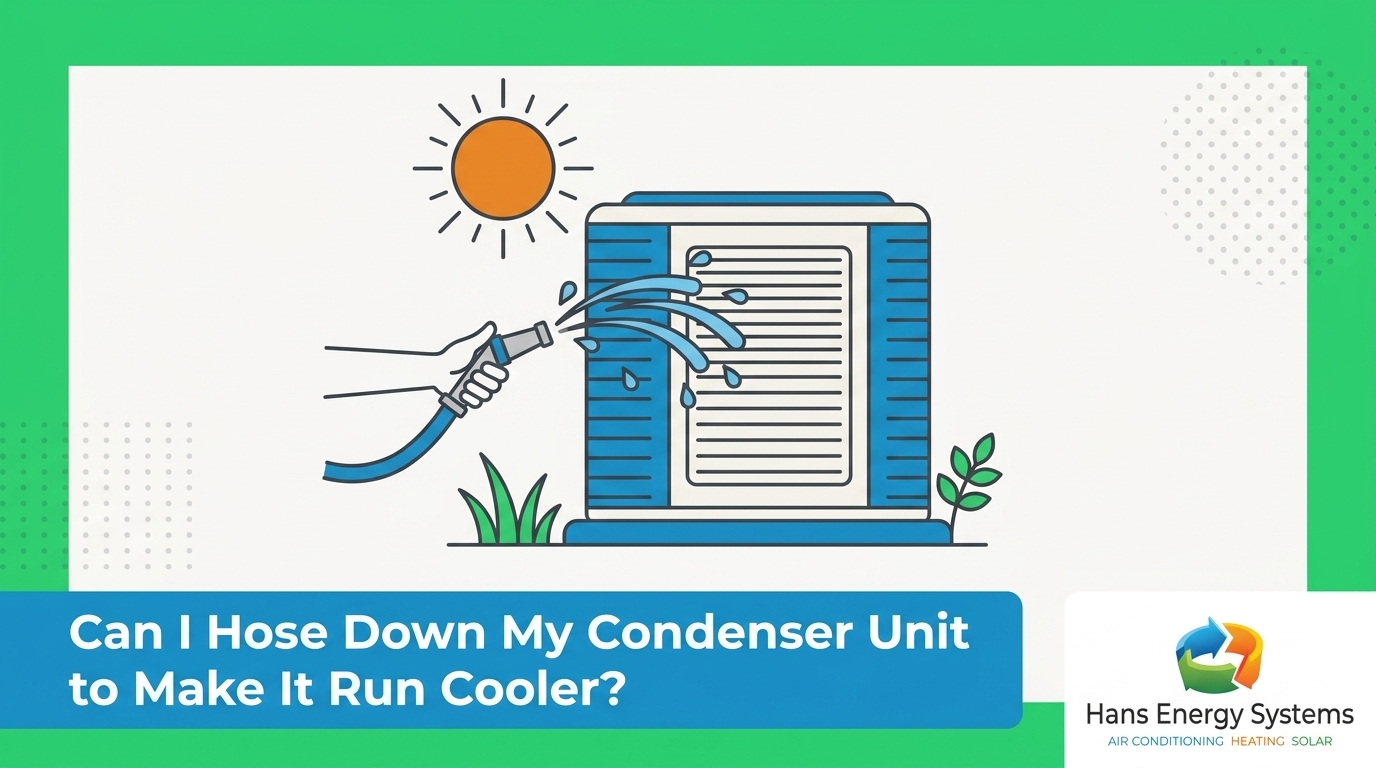
| Dirty Outdoor Coils | Gently hose off debris | Yes, for deep chemical cleaning |
| Low Refrigerant | None (illegal/dangerous DIY) | Yes, requires EPA certification |
| Short Cycling | Check thermostat batteries | Yes, to check pressures/electronics |
Regular AC maintenance in Poway, CA is the best way to prevent these afternoon headaches. By joining an HVAC maintenance plan in Poway, you ensure that coils are cleaned and electrical connections are tightened before the 100-degree days arrive.
Immediate Steps if Your AC Shuts Off During Peak Heat Hours
If your home is getting hot and the AC is silent, follow these steps:
- Check the Breaker: Go to your electrical panel. If the AC breaker is in the middle position, flip it to “OFF” and then back to “ON.” Warning: If it trips again immediately, do not reset it a second time. This indicates a “dead short” or a grounded compressor, which is a fire risk.
- Inspect the Thermostat: If the screen is blank, replace the batteries. Ensure it is set to “Cool” and “Auto,” not just “On.”
- Clear the Area: Check the outdoor unit. If bushes or weeds have grown within two feet of it, the unit is choking. Clear the debris to let it breathe.
- Check for Ice: Look at the copper lines leading into your indoor unit. If you see white frost or ice, turn the system to “Fan Only” and let it melt for at least 24 hours before trying to cool again.
- Shade the Condenser: While you shouldn’t “box in” your unit, providing an umbrella or a temporary awning that blocks the direct 3 PM sun (while allowing plenty of airflow) can sometimes lower the ambient temperature enough to keep the system running.
For more detailed help, our guide on common AC problems in Poway and solutions can walk you through the specifics.
Long-Term Solutions for Reliable Summer Cooling
If your system is more than 10–15 years old, it may simply be unable to handle the modern heatwaves we are seeing in May 2026. Older units were often designed for a climate that was 5 degrees cooler on average.
When we perform an Ac Installation in Poway, CA, we use a “Manual J” calculation. This isn’t just a guess based on square footage; it accounts for your windows, insulation, and the direction your house faces. An undersized unit will run forever and never cool the house, while an oversized unit will turn on and off so fast it never removes humidity, leaving you feeling “clammy.”
If you notice warning signs your AC needs replacement in Poway, such as frequent afternoon breakdowns or skyrocketing energy bills, it may be more cost-effective to invest in a new, high-efficiency system. Modern units use variable-speed compressors that can “throttle down” instead of shutting off, providing much more consistent comfort during peak hours. If you’re tired of the cycle of repairs, it might be time for an AC replacement.
Frequently Asked Questions
Why is my AC unit leaking water in Poway?
A leaking AC unit is usually tied to the same issues that cause afternoon shutdowns. If your air filter is dirty, the evaporator coil freezes. When that ice melts, it can overwhelm the drain pan and cause a leak. Additionally, a clogged condensate line can cause water to back up, triggering a safety float switch that shuts the whole system down to prevent water damage to your home.
Is it normal for my AC to run 12-16 hours a day during a heatwave?
In San Diego locations like Escondido or Poway, yes. When temperatures exceed 95°F, it is perfectly normal for your AC to run for 12 to 16 hours a day. On days where it hits 105°F, the system may run almost continuously from noon until 8 PM. As long as the air coming out of the vents is cold (roughly 15-20 degrees cooler than the air going in), the system is simply doing its job. However, this level of use makes HVAC maintenance critical to prevent burnout.
How does short cycling impact my energy bills and system lifespan?
Short cycling—when the AC turns on and off every 3 to 5 minutes—is an “AC killer.” The most energy-intensive part of a cooling cycle is the startup. If your system is restarting 10 times an hour, your energy bills will be significantly higher than if it ran for one long 40-minute cycle. Furthermore, this constant “starting” puts immense strain on the compressor. If you don’t address short cycling early, you may find yourself asking when to replace your AC system in Poway much sooner than you expected.
Conclusion
The mystery of the afternoon AC shutdown usually boils down to a system that is struggling under the weight of San Diego’s peak heat. Whether it’s a simple fix like a dirty filter or a more complex issue like a failing capacitor or low refrigerant, ignoring the problem will only lead to more expensive repairs down the line.
At Hans Energy Systems, we pride ourselves on being the reliable choice for homeowners in Poway, San Diego, and throughout the county. We provide professional diagnostics to get to the root cause of why does my ac shut off during peak heat hours, ensuring your home stays a sanctuary of cool air even when the sun is at its most intense.
Don’t spend another afternoon in the heat. If your system is behaving erratically, contact us for expert Ac Repair and let us restore your comfort today.