
The Summer Cooling Crisis in Mid-Century Tract Homes
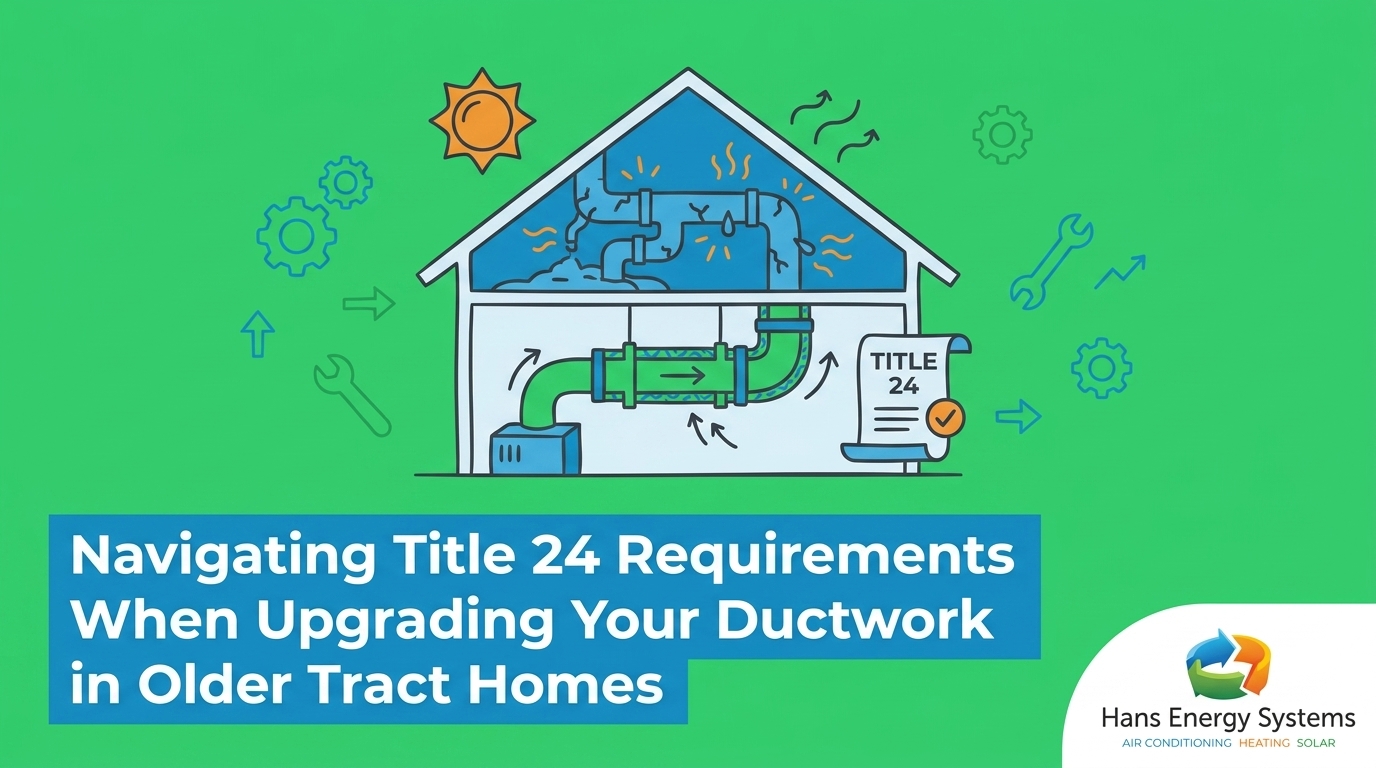
Your air conditioner is running nonstop, but the bedrooms at the end of the hall still feel uncomfortably warm. Navigating Title 24 requirements when upgrading your ductwork in older tract homes might sound intimidating, but it is actually the key to solving this exact problem. At Hans Energy Systems, we see this pattern constantly during Poway’s intense July heat waves: homeowners struggle to keep older properties comfortable when the peak summer cooling load hits. The underlying culprit is rarely the air conditioning unit itself; more often, it is the original, uninsulated ductwork hidden in the attic.
If you are tired of paying to cool your attic instead of your living room, exploring professional HVAC services is the first step toward lasting comfort and compliance.
Poway’s hot, dry summer climate specifically exposes the weaknesses of these aging air distribution systems. In the 1960s and 1970s, builders often installed thin metal ducts or early flexible tubing with little to no insulation. As attic temperatures soar well above 130 degrees during a heat wave, that uninsulated ductwork bleeds cooled air before it ever reaches your living spaces. Upgrading this failing infrastructure triggers state-mandated energy efficiency codes. While this adds a layer of regulatory oversight to your project, compliance is not just a bureaucratic hurdle—it is a guaranteed path to superior cooling performance.
The Hidden Cost of Original Ductwork
Most homeowners do not realize that leaky ducts can lose up to 30% of the conditioned air moving through them. When your air conditioner has to work a third harder just to maintain a baseline temperature, the mechanical strain accelerates wear and tear on every component. By replacing these compromised channels with modern, heavily insulated materials, you stop cooling the neighborhood and start directing every ounce of conditioned air exactly where it belongs.
What California’s Title 24 Means for Your Duct Upgrade
California’s Title 24 Building Energy Efficiency Standards were established to ensure that homes and commercial buildings minimize energy waste. In plain English, these regulations mandate that any significant alteration to your home’s mechanical systems must meet strict modern performance benchmarks. The state requires strict oversight specifically for duct replacement and major HVAC alterations because leaky air distribution is one of the largest sources of energy loss in residential properties.
These regulations apply universally to residential upgrades, not just new construction. If you are planning an AC installation in Poway that involves replacing more than 40 feet of ductwork, you are required by law to bring that system up to current code. Because Poway falls under Building Climate Zone 10, the regulations dictate specific, stringent insulation and sealing requirements designed to combat the intense summer heat.
Why Duct Sealing is Heavily Regulated
The state’s primary goal is reducing grid strain during peak summer cooling hours. When thousands of homes lose cooled air to unconditioned attics, power plants have to work overtime to meet the artificial demand. Mandatory duct sealing prevents this excessive energy waste.
| Feature | Original Mid-Century Ductwork | Modern Title 24 Standards |
|---|---|---|
| Insulation | Bare metal or minimal R-2 fiberglass | Thick R-8 insulation for attics |
| Sealing Method | Cloth tape that degrades and peels over time | Mastic sealant and durable mechanical fasteners |
| Verification | None required at the time of original construction | Mandatory third-party HERS testing |
Overcoming Architectural Challenges in Older Developments
Connecting modern regulatory requirements to the physical realities of mid-century construction requires careful planning. Poway mid-century tract homes were simply not designed to accommodate modern R-8 insulated ductwork. The original attic layouts are often cramped, featuring shallow roof pitches and intricate truss webs that leave very little room for maneuvering.
Routing thicker, heavily insulated ducts through these tight spaces presents a significant structural challenge. If a duct is squeezed between framing members or compressed under its own weight, the internal diameter shrinks. This compression chokes the airflow, completely negating the benefits of the new installation. To maintain proper air volume and meet code, installers must use specialized strapping and suspension techniques. The ducts must be hung at specific intervals to keep them round, fully expanded, and clear of sharp architectural edges.
Resolving these design flaws directly eliminates hot spots and weak airflow in distant bedrooms. Recently, our installation team at Hans Energy Systems helped a local Poway homeowner going through a condo renovation with raised ceilings who experienced this exact issue. The architectural changes resulted in weak airflow to the bedrooms, and the system struggled to cool the space correctly. By replacing all the ducts, routing them carefully, securing them properly without compressing the material, and adjusting the blower speed, our technicians dramatically improved airflow and cooling—saving the homeowner from needing to install an expensive booster fan.
Decoding the HERS Testing Process
The Home Energy Rating System (HERS) is a state-certified program designed to verify that your home’s energy upgrades actually perform as promised. An independent HERS rater is a certified inspector who tests your system to ensure it meets California’s strict standards. By law, the HVAC installer and the HERS rater must be separate entities. This separation ensures completely objective verification and protects you from substandard workmanship.
The core of this inspection is the duct pressurization test. Here is exactly how the process works:
- Sealing the envelope: The rater temporarily tapes over all the supply registers and return grilles inside your home.
- Attaching the equipment: A calibrated fan, often called a duct blaster, is attached to the main return opening.
- Pressurizing the system: The fan forces air into the sealed ductwork, raising the internal pressure to a standardized level.
- Measuring the loss: The rater’s digital gauges measure exactly how much air is escaping through hidden seams and connections in the attic.
To pass the alteration inspection, the system must meet strict HERS duct leakage percentage requirements, achieving 15% or less total leakage.
What Happens If a Home Fails the Test?
If the leakage exceeds the legal threshold, the installation team must return to locate and seal the remaining leaks. This remediation process can delay the final approval of your project. In our years of performing HVAC upgrades in Poway, we’ve found that meticulous initial sealing by a dedicated installation team is critical. Doing it right the first time—a standard we strictly enforce at Hans Energy Systems—prevents frustrating re-testing delays and ensures your system operates at peak efficiency from day one.
Translating Regulatory Compliance into Comfort
While the technical details of duct pressurization are important, the real focus should be on the tangible benefits you will experience in your daily life. Meeting these strict leakage thresholds transforms your home’s indoor air quality and temperature consistency. When our team eliminates these leaks, we ensure that the air you pay to cool actually reaches your living room, bedroom, and kitchen.
The immediate benefits of a sealed system include:
- Reduced mechanical strain: Your AC compressor no longer has to overcompensate for lost air during the July peak summer cooling load, which helps extend the lifespan of the equipment.
- Stabilized indoor humidity: Sealed ducts prevent humid, stagnant attic air from being drawn into the return side of your system and circulated through your home.
- Significant dust reduction: By sealing out the attic environment, you stop fiberglass particles, old dust, and insulation fibers from blowing out of your vents.
- Consistent room temperatures: The bedrooms furthest from the blower motor finally receive the exact same volume of cooled air as the rest of the house.
Ultimately, a Title 24 upgrade is an investment in your home’s long-term infrastructure and livability. Upgrading your ductwork lays the foundation for any future San Diego HVAC services you might need, ensuring that whatever equipment you install will operate under ideal conditions.
Managing Permits and Inspections Stress-Free
The administrative side of duct upgrades can feel overwhelming, but it follows a highly predictable path. The standard timeline for securing permits for HVAC and duct alterations begins before any physical work starts. The installing contractor files the necessary paperwork with the local building department, detailing the scope of the energy upgrades.
Once the permit is issued, the physical installation takes place. After the new ducts are suspended and sealed, the coordination between the installer, the city inspector, and the HERS rater begins. The HERS rater performs their pressurization test and registers the passing certificate with the state database. Finally, the city inspector reviews the physical work and the HERS certificate to close out the permit.
Working with our team at Hans Energy Systems means leaning on our deep, first-hand experience with Poway’s specific mid-century housing layouts. We manage these complex permits and inspections regularly, translating our local expertise into a predictable, stress-free path to compliance that prioritizes energy efficiency without getting bogged down in red tape. Our knowledgeable installation team handles the complex paperwork, scheduling, and coordination behind the scenes, allowing you to focus on enjoying your newly comfortable home. Always maintain your final records of compliance; these documents are highly valuable for future home appraisals or if you ever decide to sell the property.

Maximizing the Value of Your Efficiency Upgrades
Exceeding baseline code requirements offers financial and long-term benefits that go well beyond simply passing an inspection. Highly sealed ductwork lowers monthly utility consumption by delivering every ounce of cooled air directly to your living space. When your system does not have to run as long to satisfy the thermostat, your energy usage drops significantly.
There is also tremendous potential for pairing duct upgrades with high-efficiency HVAC equipment for compounded savings. A top-tier air conditioner can only perform as well as the ductwork it is attached to. By upgrading both simultaneously, you maximize the efficiency rating of the new equipment.
Furthermore, qualifying energy efficiency upgrades may be eligible for general tax credits or regional utility incentives. Because energy codes are designed to reduce strain on the power grid, various programs exist to reward homeowners who invest in high-performance home envelope improvements. You can learn more about how California energy efficiency rebates might apply to your specific project, and it is always advisable to consult with your tax professional regarding active incentive programs before finalizing your installation plans.
Frequently Asked Questions
What happens during a HERS duct leakage test?
During a HERS duct leakage test, an independent rater seals all the vents in your home and attaches a calibrated fan to the return grille. They pressurize the ductwork to measure exactly how much air is escaping into unconditioned spaces like the attic. This process verifies that the installation team successfully sealed all seams and connections to meet state standards.
Why do older homes often fail Title 24 duct inspections?
Older homes often fail Title 24 duct inspections because their original ductwork was installed long before modern sealing standards existed. The old cloth tape degrades, metal seams separate, and the thin insulation deteriorates over decades of extreme attic heat. Without a complete replacement and proper mastic sealing, these aging systems cannot achieve the mandatory 15% or less leakage threshold.
Do I need a permit to replace ductwork in California?
Yes, you need a permit to replace ductwork in California. State law requires a permit for any significant HVAC alteration, including installing or replacing more than 40 feet of ducting in unconditioned spaces. This ensures the work is inspected for safety and complies with current building energy efficiency codes.
How much duct leakage is allowed under Title 24?
Under Title 24, duct leakage for alterations in existing homes must be reduced to 15% or less of the total system airflow. This strict metric ensures that the vast majority of the air your system conditions actually reaches your living areas. An independent HERS rater must verify this percentage before the city will close your permit.
Can I just repair my ducts without triggering Title 24 requirements?
Minor repairs, such as fixing a single disconnected branch or taping a small tear, usually do not trigger Title 24 requirements. However, if you replace, install, or significantly alter more than 40 feet of ductwork, the state classifies it as a major alteration. At that point, the entire system must be tested and brought into compliance with modern leakage standards.
Who is responsible for hiring the HERS rater?
While the homeowner is technically responsible for ensuring the test is completed, a reputable HVAC installation team will typically coordinate the hiring and scheduling of the HERS rater on your behalf. By law, the rater must be a completely independent third party, meaning they cannot be an employee of the company that installed your ductwork.
Secure Your Home’s Comfort and Compliance
Navigating Title 24 requirements when upgrading your ductwork in older tract homes does not have to be a frustrating experience. With a clear understanding of the HERS testing process and a knowledgeable team managing the details, you can rest assured your mid-century home will easily meet modern standards. Protect your comfort and stop wasting energy—contact our team at Hans Energy Systems to schedule your comprehensive duct evaluation today.