
Why Some Air Conditioners Fail Earlier in Hot Regions — And What It Means for Your Home
Why some air conditioners fail earlier in hot regions is one of the most common concerns for homeowners in places like Poway, San Diego, and across Southern California — and the answer comes down to a combination of physics, mechanical stress, and environmental conditions working against your system every single day.
Here are the core reasons AC units wear out faster in hot climates:
- Extreme runtime — AC systems in hot regions run 2,500–3,500 hours per year vs. 600–900 hours in cooler northern states
- High temperature differential — On a 106°F day, your AC must overcome a 34°F gap between indoor and outdoor air, vs. just 13°F on a mild 85°F day
- Internal overheating — Outdoor cabinet temperatures can spike above 130°F, degrading lubricants, electrical insulation, and key components
- Capacitor failure — In climates like Texas and coastal California, capacitors last just 5–7 years vs. 8–10 years in cooler regions
- Environmental wear — UV radiation, dust buildup, humidity, and salt air all compound heat stress on metal and electrical parts
- Design limits — Most residential AC units are engineered and tested at a design temperature of only 95°F, meaning anything above that pushes the system beyond its intended operating range
The result? While the national average lifespan for a central AC system is 15–20 years, units in extreme heat zones routinely fail in just 8–12 years. A five-year-old unit in a hot climate may have already accumulated the equivalent wear of a 15-year-old unit in a cooler state.
If your system is struggling during summer heat waves in Poway or the greater San Diego area, understanding why is the first step to stopping the damage before it becomes a full breakdown.

The Science Behind Why Some Air Conditioners Fail Earlier in Hot Regions
To understand why our cooling systems take such a beating in San Diego County, we have to look at the physics of heat exchange. Most air conditioners are designed to maintain a “temperature differential” (or Delta T) of about 20 degrees. This means if it is 100°F outside in Escondido, your AC is physically reaching its limit trying to keep your living room at 80°F.
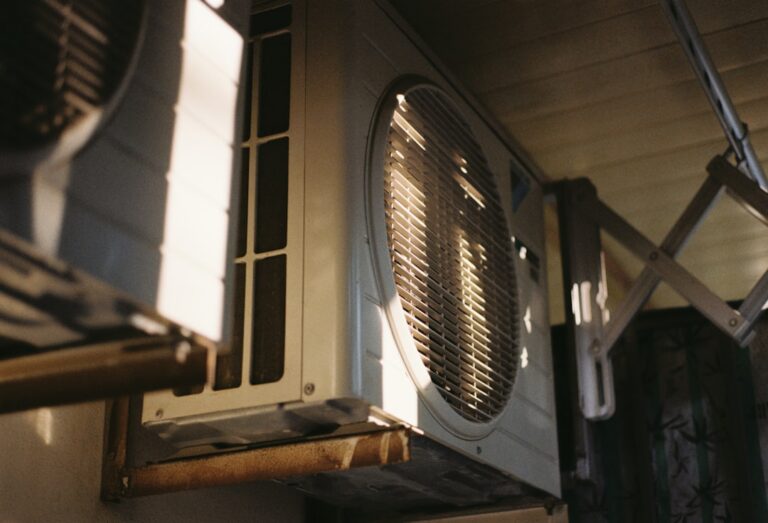
When the mercury climbs to 105°F or higher, the thermal load becomes immense. The system isn’t just fighting the air temperature; it’s fighting the “heat sponge” effect of your home’s walls, attic, and roof, which radiate heat long after the sun goes down. Inside the outdoor unit—the condenser—temperatures can soar to 130°F or even 150°F. This extreme cabinet heat creates a hostile environment for electrical parts and moving machinery. If your system is already making odd noises or failing to cool, it might be time to look into Ac Repair before the next heat wave hits.
Mechanical Warfare: How Extreme Heat Damages Compressors
We often describe a Southern California summer as “mechanical warfare” for your compressor. The compressor is the heart of the system, and heat is its primary enemy. Inside the compressor, lubricating oil keeps metal parts moving smoothly. However, under extreme temperatures, this oil thins out—much like butter melting on a hot sidewalk. When the oil loses its viscosity, it can no longer protect the internal bearings, leading to metal-on-metal friction and eventual seizure.
Furthermore, the motor windings inside the compressor are coated with a protective enamel (lacquer). Sustained high heat causes this lacquer to become brittle and eventually flake off. Once the insulation fails, the motor shorts out, resulting in a “burned-out” compressor. This is a primary reason why some air conditioners fail earlier in hot regions. For residents in North County, timely Ac Repair Poway Ca can identify these lubrication issues before they lead to a total system “heart attack.”
The Capacitor: Why This “Canary in the Coal Mine” Fails First
If the compressor is the heart, the capacitor is the “foreman” of the electrical team. It stores up a massive electrical charge to help the motor kick-start. Most capacitors contain a dielectric fluid that helps dissipate heat. In the scorching sun of a San Marcos or El Cajon afternoon, this fluid can actually begin to vaporize.
As the fluid evaporates, the capacitor loses its ability to hold a charge. You might notice your outdoor unit humming or buzzing, but the fan won’t spin—this is a classic sign of a failing capacitor. Because heat spikes the startup amperage (the amount of power needed to turn the unit on), the capacitor works harder and harder until it literally swells or leaks. It is the “canary in the coal mine” for your HVAC system. If you catch a failing capacitor early through regular Hvac Service In Poway Ca, you can save yourself the much higher cost of a compressor replacement.
Environmental Factors Accelerating AC Wear in Poway and Beyond
While temperature is the main culprit, it doesn’t work alone. In our neck of the woods, several local factors contribute to Common Ac Problems In Poway And Solutions.
First, there is UV Radiation. The intense Southern California sun isn’t just tough on our skin; it destroys the foam insulation on your refrigerant lines and makes plastic fan blades brittle. Second, Dust Accumulation acts like a thermal blanket. In drier areas like Ramona or Scripps Ranch, fine dust coats the condenser coils, trapping heat inside the unit and forcing the compressor to work 20% harder to move the same amount of heat. Finally, for our friends in Del Mar, La Jolla, or Oceanside, Salt Air Corrosion is a major factor. Salt accelerates the oxidation of aluminum fins, leading to refrigerant leaks and reduced efficiency.
Humidity and the Silent Strain of Latent Cooling Loads
We often think of San Diego as “dry heat,” but coastal humidity and monsoon spikes in late summer add a “latent cooling load” to our systems. An air conditioner doesn’t just lower the temperature; it has to wring water out of the air. This moisture collects on the evaporator coils and must be drained away.
In humid conditions, the system has to run longer cycles just to keep the “sticky” feeling out of the house. This extra runtime leads to faster wear. Additionally, the constant presence of moisture can lead to biological growth (algae or mold) in the drain lines. If you see water pooling around your indoor unit, you might be wondering Why Is My Ac Unit Leaking Water In Poway. Usually, it’s a clogged drain line caused by this heavy humidity load.
Why Some Air Conditioners Fail Earlier in Hot Regions Due to Poor Sizing
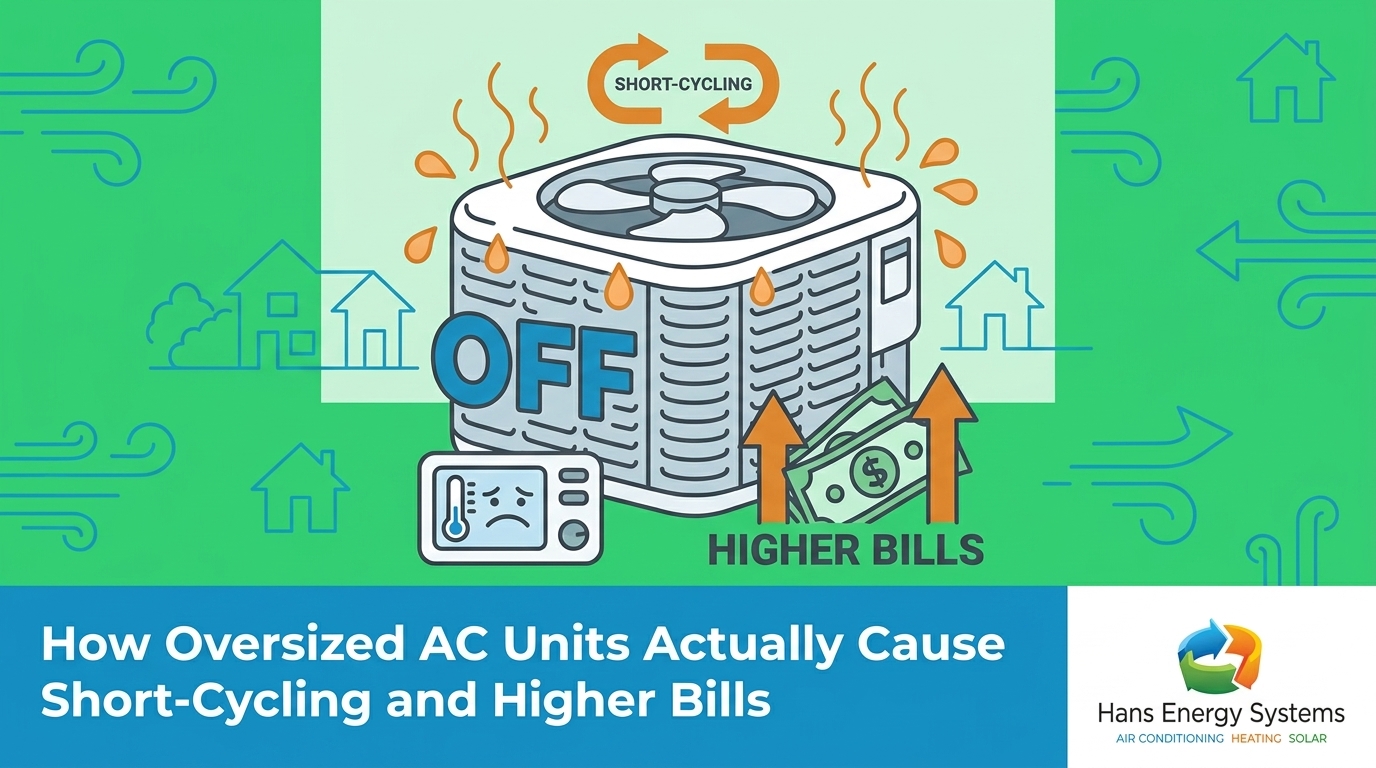
A mistake we often see is “oversizing” a unit. You might think a bigger AC would be better for a hot climate, but the opposite is often true. An oversized unit will cool the house too quickly and then shut off, a process known as Short Cycling.
Short cycling is devastating in hot regions because the startup phase draws 3 to 5 times the running amperage of the system. This puts immense strain on the capacitor and compressor. Conversely, an undersized unit will run 24/7, never reaching the thermostat setting and eventually burning itself out. Proper load calculations and airflow balancing are essential to ensure your system isn’t its own worst enemy. If your unit turns on and off every few minutes, you should investigate When Ac Starts Short Cycling In Poway to prevent a premature death of the motor.
Recognizing Early Warning Signs Before a Total Breakdown
You don’t want to wait until your home is 90°F to realize there is a problem. Most systems give off “distress signals” before they quit entirely. Listen for unusual humming, grinding, or clunking sounds coming from the outdoor cabinet. These often indicate a motor bearing is failing or a capacitor is on its last legs.
Weak airflow is another red flag. If the air coming out of your vents feels more like a gentle breeze than a strong gust, your blower motor may be struggling, or your coils could be clogged. If you notice these Warning Signs Ac Needs Replacement In Poway, it’s better to act in May than to wait for an emergency in August.
Identifying Why Some Air Conditioners Fail Earlier in Hot Regions Through Visual Cues
Sometimes, the evidence is visible. If you see ice forming on the copper refrigerant lines or the indoor evaporator coil—even when it’s 100°F outside—you have a serious airflow or refrigerant issue.
Ice buildup usually happens because a dirty filter or a failing blower motor has prevented warm air from reaching the cold coils, causing the condensation to freeze. This can also happen in ductless systems; learning Why Your Ductless Ac Freezes Up In Summer can help you troubleshoot before the ice causes permanent damage to the compressor.
How to Extend Your System’s Life During a Heat Wave
The good news is that you aren’t powerless. There are simple steps every homeowner in Chula Vista or Santee can take to protect their investment.
- Filter Replacement: This is the single most important task. During a heat wave, your AC moves a massive volume of air. A clogged filter forces the fan to work overtime. We recommend checking your filter every 30 days during the summer.
- Coil Cleaning: Gently rinse your outdoor condenser with a garden hose (don’t use a pressure washer!) to remove dust and debris.
- Clearance Zones: Ensure there are at least 2 feet of clear space around your outdoor unit. Overgrown shrubs or stored items block airflow, which is the lifeblood of your AC.
We know that Dirty Air Filters Can Harm Ac Efficiency significantly, sometimes increasing energy bills by 15% while shortening the system’s life.
| Feature | Well-Maintained System | Neglected System |
|---|---|---|
| Lifespan (Hot Region) | 12–15 Years | 7–10 Years |
| Breakdown Risk | 30% Lower | High |
| Efficiency | High (lower bills) | Declining (rising bills) |
| Repair Frequency | Occasional/Minor | Frequent/Major |
Proactive Maintenance Strategies for Southern California Homeowners
Beyond the basics, think about the “thermal environment” of your home. Using a smart thermostat can help you manage the load. Instead of turning the AC off entirely when you leave—which allows the house to become a “heat sponge”—set it to a higher but reasonable temperature (like 78°F). This prevents the system from having to work for six straight hours to cool the home back down.
Additionally, sealing leaky ducts can improve efficiency by 30%. In many San Diego homes, cool air is lost in the attic before it ever reaches your bedroom. Improving attic insulation can also reduce the ambient temperature around your indoor air handler, giving the machinery a much-needed break.
When to Choose Replacement Over Repair in Extreme Climates
There comes a point where repairing an old unit is like putting a new transmission in a car with 300,000 miles. If your system is over 10 years old and faces a major repair (like a compressor failure), the “5,000 Rule” is a good guide: multiply the age of the unit by the repair cost. If the result is over $5,000, replacement is usually the smarter financial move.
Newer systems are also much better equipped for our climate. As of 2025/2026, the industry is moving toward A2L refrigerants (like R-454B) which are more environmentally friendly. If you are still using a system with R-22 (Freon), repairs will only get more expensive as that refrigerant is phased out. Knowing When To Replace Your Ac System In Poway can save you from a “cooling crisis” when the next heat dome arrives.
Selecting High-Efficiency Features for Hot Regions
If you are shopping for a new unit, look for features designed for the desert and coastal heat of Southern California:
- Variable-Speed Compressors: Unlike standard units that are either “on” or “off,” these can run at lower speeds to maintain a steady temperature, reducing wear and tear.
- High SEER2 Ratings: These units are engineered to provide more cooling for every watt of electricity used.
- Corrosion Coatings: If you live within 5 miles of the coast, look for units with factory-applied anti-corrosion coatings to fight salt air.
- Energy Star Certification: This ensures the unit meets strict efficiency guidelines, which often qualifies you for local rebates.
Frequently Asked Questions about AC Failure
Why does my AC struggle when it is over 95°F outside?
Most residential systems are designed for a “design temperature” of 95°F. Once it gets hotter than that, the physics of heat exchange become much less efficient. Your AC isn’t necessarily “broken”; it is simply reaching the upper limit of what it was engineered to do.
How often should I change my air filter during a heat wave?
In hot regions where the AC runs 12+ hours a day, we recommend checking the filter every month. If you have pets or live in a dusty area like Lakeside or Ramona, you might need to change it every 30 days to maintain proper airflow.
Does shading my outdoor AC unit actually help prevent failure?
Yes, but only if it doesn’t block airflow. Shading a unit can lower the ambient temperature by 10°F, which helps the system shed heat. However, if you build a tight fence or box around it, you’ll trap the hot air, which is much worse for the unit than direct sunlight.
Conclusion
At Hans Energy Systems, we’ve spent years helping our neighbors from Poway to Chula Vista navigate the unique challenges of the Southern California climate. We know that the heat here isn’t just a comfort issue—it’s a mechanical challenge that requires expert care and reliable equipment. Whether you need a quick tune-up to survive a July heat wave or are ready to upgrade to a high-efficiency system that can handle the 100°F+ days of the future, we are here to help.
Don’t wait for your system to become another statistic of the “mechanical warfare” of summer. Schedule your professional AC replacement today to ensure your home stays cool all summer long. With our deep roots in the San Diego community and our commitment to exceptional customer service, we’ll make sure your home remains a sanctuary of comfort, no matter how high the sun climbs.