
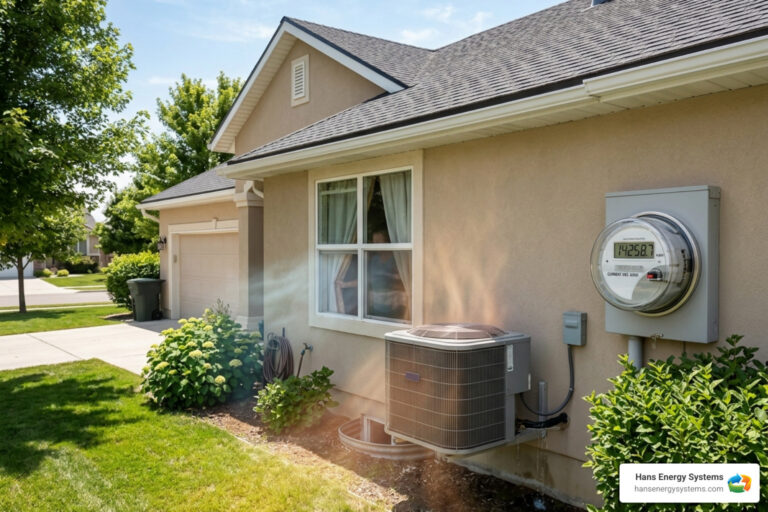
Why Energy Bills Spike During Heat Waves — And What It Means for San Diego Homeowners
Why energy bills spike during heat waves is one of the most searched questions every summer — and if your bill jumped last month, there’s a real explanation behind it.
Here’s a quick breakdown of the main reasons:
- Your AC runs longer and harder. The bigger the gap between outdoor and indoor temperatures, the more your system works. One day with a mean temperature above 32°C (89.6°F) can increase annual electricity consumption by as much as 8.9%.
- Grid demand surges. When millions of air conditioners turn on at the same time, utilities strain to keep up — and that cost gets passed to you.
- Utility rates go up. U.S. electric companies requested $29 billion in rate increases in just the first half of 2025 — more than double the year before.
- Hidden charges add up. Demand charges, Time-of-Use (TOU) rates, and infrastructure fees all climb during peak summer periods.
- Your home leaks cool air. Poor insulation, air leaks, and aging equipment force your system to work even harder.
For San Diego homeowners, these pressures are compounded by some of the highest utility rates in the country, ongoing wildfire mitigation costs baked into SDG&E bills, and increasingly intense heat events driven by climate change. Spring 2026 is already tracking warmer than average — meaning the summer cooling season may arrive earlier and hit harder than expected.
The good news is that most of these cost drivers are manageable with the right home upgrades and maintenance strategy.

Understanding Why Energy Bills Spike During Heat Waves
When the mercury climbs in places like Poway or El Cajon, we naturally reach for the thermostat. But have you ever wondered about the physics of that choice? The primary reason why energy bills spike during heat waves is the sheer volume of work your air conditioner must perform to move heat out of your home.
The Temperature Differential and Runtime
Your AC doesn’t “blow cold air” so much as it removes heat. When it is 75°F outside, your unit can easily maintain a 70°F interior. However, when a heat wave pushes outdoor temperatures to 100°F, that “temperature differential” becomes massive. To maintain comfort, your system moves from running in short cycles to running almost continuously. This is known in the energy industry as the “intensive margin”—where existing equipment is pushed to its absolute limit.
Research shows that even a single extra day with a mean temperature exceeding 32°C (roughly 90°F) can lead to an 8.9% increase in annual electricity consumption. For a large home in San Diego, running central air for eight hours a day can cost roughly $72 to $108 per month under normal conditions, but those numbers climb aggressively during extreme heat events. To ensure your system is prepared for this load, we always recommend a professional AC system check before the peak of summer.
Usage Comparison Table
| Day Type | Avg. Temp | AC Runtime (Est.) | Consumption Impact |
|---|---|---|---|
| Mild Day | 72°F | 2-4 Hours | Baseline |
| Warm Day | 85°F | 5-7 Hours | +15-20% |
| Heat Wave Day | 95°F+ | 10-14 Hours | +40% or more |
Why Energy Bills Spike During Heat Waves Due to Grid Demand
It’s not just your home that struggles; the entire electrical grid feels the heat. As of May 2026, we are seeing more frequent “heat domes”—stationary high-pressure systems that trap hot air over the Southwest. When everyone from Chula Vista to Oceanside turns on their AC at 4:00 PM, the grid faces a massive surge in demand.
Furthermore, extreme heat physically makes the grid less efficient. Through a process called thermal expansion, power lines can sag and power plants actually become less efficient at generating electricity. This means it takes more raw energy to deliver the same amount of power to your home. If your unit is struggling to keep up during these peak times, it might be suffering from Common AC problems in Poway and solutions like frozen coils or refrigerant leaks.
Why Energy Bills Spike During Heat Waves Beyond Just Usage
Even if you kept your AC off, your bill might still rise. This is due to the complex way utilities charge for power. In San Diego, we deal with:
- Time-of-Use (TOU) Rates: Electricity is significantly more expensive during “peak” hours (usually 4:00 PM to 9:00 PM) when the grid is most strained.
- Demand Charges: These are fees based on the highest level of electricity you draw at any one time. If you run the dryer, the dishwasher, and the AC simultaneously during a heat wave, you could trigger a high demand charge.
- Infrastructure Costs: Utilities are currently investing billions into grid hardening to prevent wildfires. In the first half of 2025 alone, U.S. utilities requested $29 billion in rate increases to cover these upgrades.
If your system breaks down during one of these expensive peak periods, you’ll need a reliable team for AC repair Poway CA to get things back to efficient operation quickly.
The Impact of Extreme Heat on Your Home’s Electrical System
Most homeowners focus on the AC unit, but the unsung hero (or victim) of a heat wave is your electrical panel.
Electrical Panel Strain and Safety Risks
Your electrical panel is the heart of your home’s power distribution. During a heat wave, it handles sustained high loads that it may not have been designed for—especially in older homes in areas like La Jolla or North Park. Older panels can overheat, leading to tripped breakers or, in worse cases, fire risks.
Modern homes now have higher “all-electric” loads, including EV chargers and high-efficiency appliances. If your panel is more than 25 years old, it may not be able to handle the 10+ hours of continuous AC draw required during a July heat dome. Keeping a consistent HVAC maintenance plan Poway CA helps ensure your equipment isn’t drawing more amperage than it should due to mechanical strain.
How Heat Waves Affect Appliance Efficiency
It’s not just the AC. Your refrigerator and freezer have to work significantly harder when the ambient temperature in your kitchen or garage rises. Motors wear out faster, and cumulative system stress can lead to premature failure of household appliances.
One of the simplest ways to reduce this strain is by ensuring proper airflow. For example, Dirty air filters can harm AC efficiency, making the motor work harder and draw more power, which further heats up your electrical components.
Regional Factors: Why San Diego Residents Face Higher Costs
San Diego is a beautiful place to live, but our energy landscape is unique and, unfortunately, expensive.
Wildfire Mitigation and Infrastructure Hardening
In California, a significant portion of your bill goes toward wildfire prevention. SDG&E and other utilities are under mandate to “underground” power lines and perform intensive vegetation management to prevent catastrophic fires. These costs are often passed to consumers through “base service charges”—fixed fees that remain high regardless of how much energy you save. In 2024, California energy bills were already 13% higher than the national average, largely driven by these safety upgrades.
The Role of Climate Change in Long-Term Energy Costs
As we look at the climate data for May 2026, the trends are clear: heat waves are becoming longer and more intense. The “Climate Shift Index” shows that modern heat events are now five times more likely than they were just decades ago. This creates a cycle of “energy poverty” for vulnerable households, where the cost of staying safe in the heat consumes a disproportionate amount of the monthly budget.
How to Lower Your Cooling Load and Lower Summer Bills
You don’t have to be a victim of the weather. There are actionable steps we can take together to fortify your home.
Passive Cooling and Air Sealing
Before looking at the AC, look at the “envelope” of your home.
- Insulation: Proper attic insulation acts as a barrier, keeping the sun’s heat out.
- Air Sealing: Sealing gaps around attic hatches, chimneys, and windows prevents your expensive “cool air” from escaping.
- Weatherstripping: A simple DIY fix that can save a surprising amount on your monthly bill.
Upgrading to Efficient Heat Pumps and Solar Energy
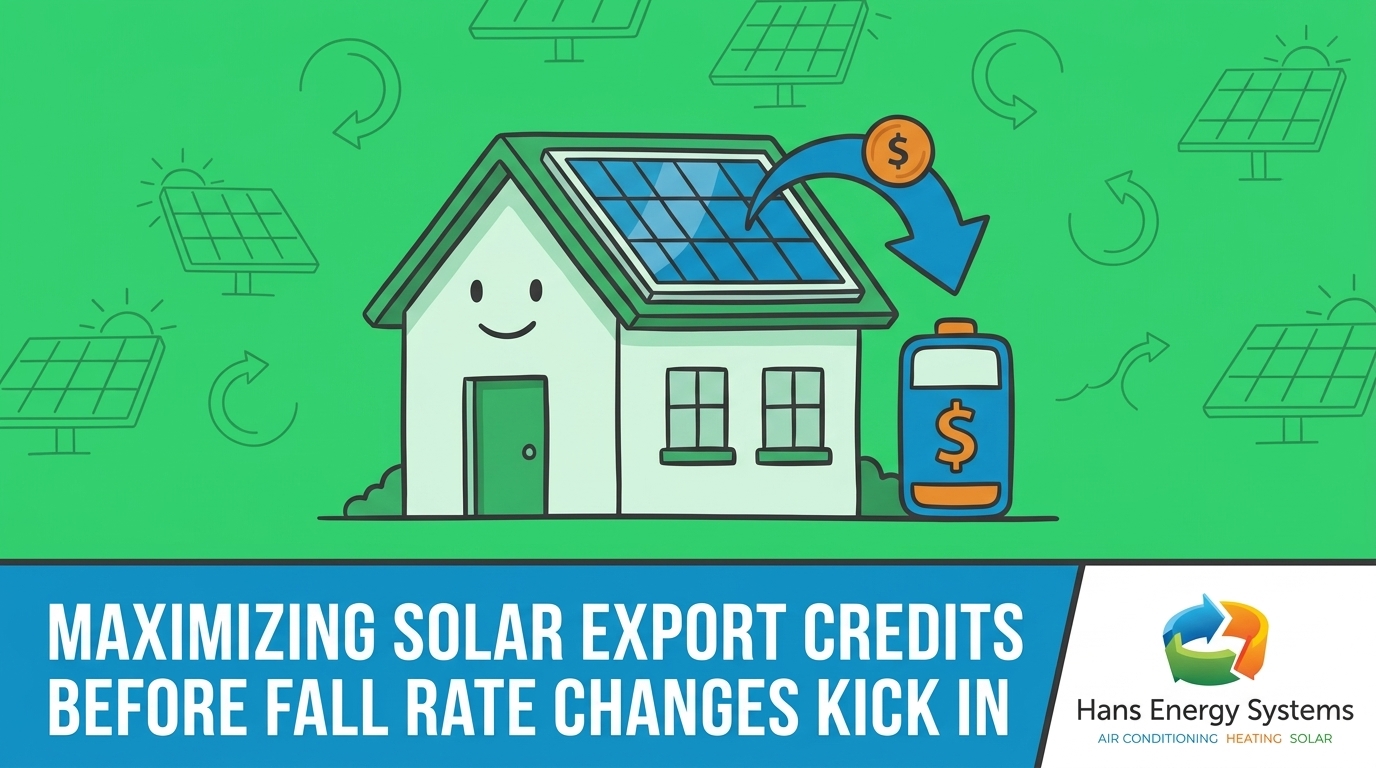
As a leader in renewable energy in San Diego, we’ve seen how transformative solar and battery storage can be. Under the current NEM 3.0 regulations, pairing solar panels with a home battery allows you to store energy during the day and use it during those expensive 4:00 PM to 9:00 PM “peak” hours.
Additionally, switching to a high-efficiency heat pump can be a game-changer. Heat pumps are incredibly efficient at both heating and cooling, often providing a much lower “operating cost” than traditional central air units, especially when powered by your own solar array.
Professional Maintenance and System Optimization
An unmaintained AC unit can lose 5% to 15% of its efficiency every year. We focus on:
- Duct Sealing: Ensuring the cool air actually reaches your rooms.
- Coil Cleaning: Dirty coils can’t shed heat effectively.
- Refrigerant Levels: Low levels make the compressor work double-time.
A regular HVAC maintenance plan Poway CA is the best insurance policy against a $500+ August electric bill.
Frequently Asked Questions about Summer Energy Spikes
Why is my AC unit leaking water in Poway?
Water leaks are common during heat waves because the unit is working overtime to dehumidify the air. If the drain line is clogged with dust or algae, that moisture has nowhere to go but your floor. You can find more details here: Why is my AC unit leaking water in Poway?
When does an AC start short cycling in Poway?
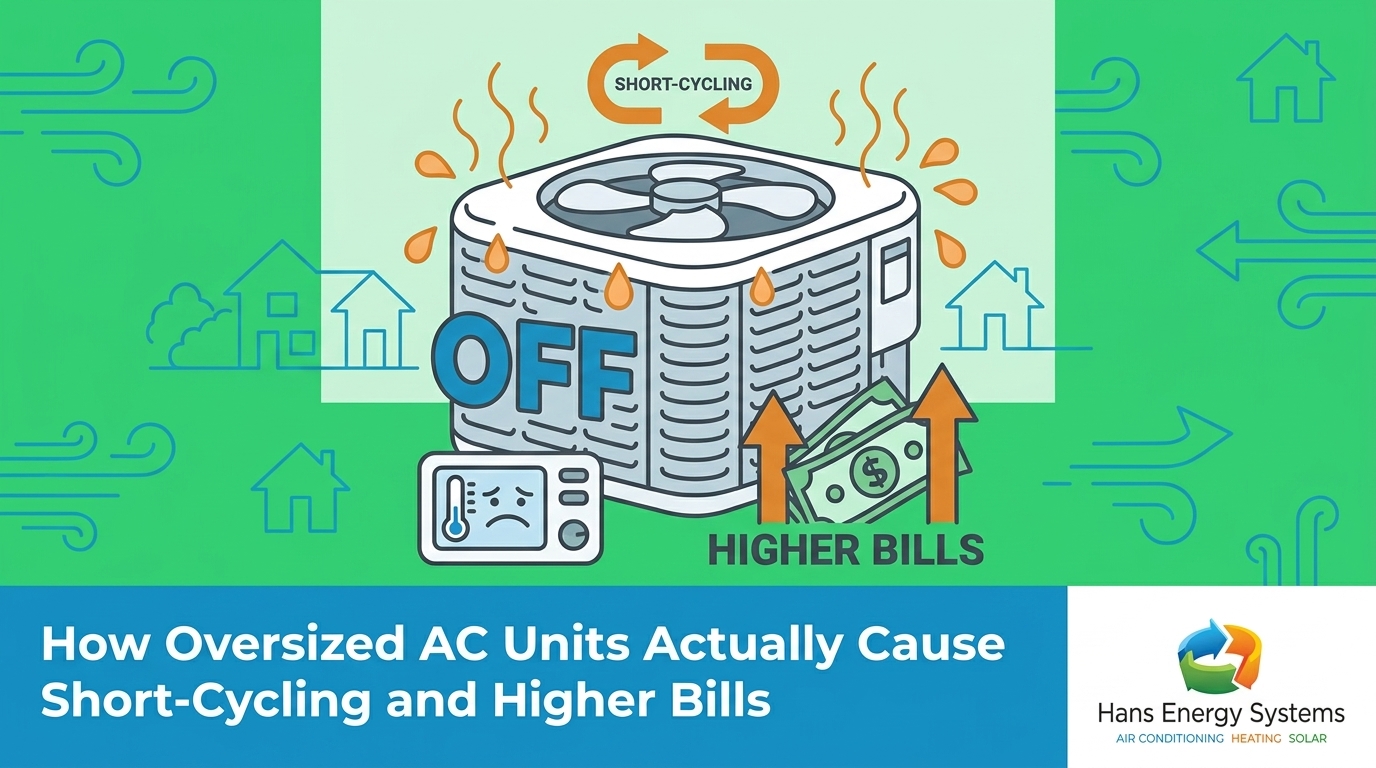
Short cycling is when your AC turns on and off rapidly. During a heat wave, this is often caused by an overheating compressor or a frozen evaporator coil. It’s a major energy waster. Learn more about When AC starts short cycling in Poway.
What are the warning signs my AC needs replacement in Poway?
If your bill is skyrocketing but your home still feels warm, or if your unit is more than 10–15 years old, it might be time for an upgrade. Check out these Warning signs AC needs replacement in Poway.
Conclusion
Understanding why energy bills spike during heat waves is the first step toward taking control of your home’s comfort and your financial health. From the mechanical strain on your AC to the regulatory costs of the California grid, the factors are many—but the solutions are clear.
At Hans Energy Systems, we are dedicated to helping our neighbors in San Diego, Poway, Carlsbad, and beyond build energy resilience. Whether you need a quick repair to get through a hot week or a full solar-and-battery integration to “opt-out” of utility price hikes, we are here to help.
For a deeper dive into managing your home’s power, read our guide: A review of electricity usage and identification of simple energy saving methods. Let’s make sure your home stays cool without breaking the bank this summer!